Galapagos Cruise Vs Island Hopping: Which Package Fits Your Trip
Cruises sail between visitor sites overnight while land packages spend daylight on ferries. Here is what that difference means in hours, dollars and wildlife access, using verified park and operator data.
Short answer
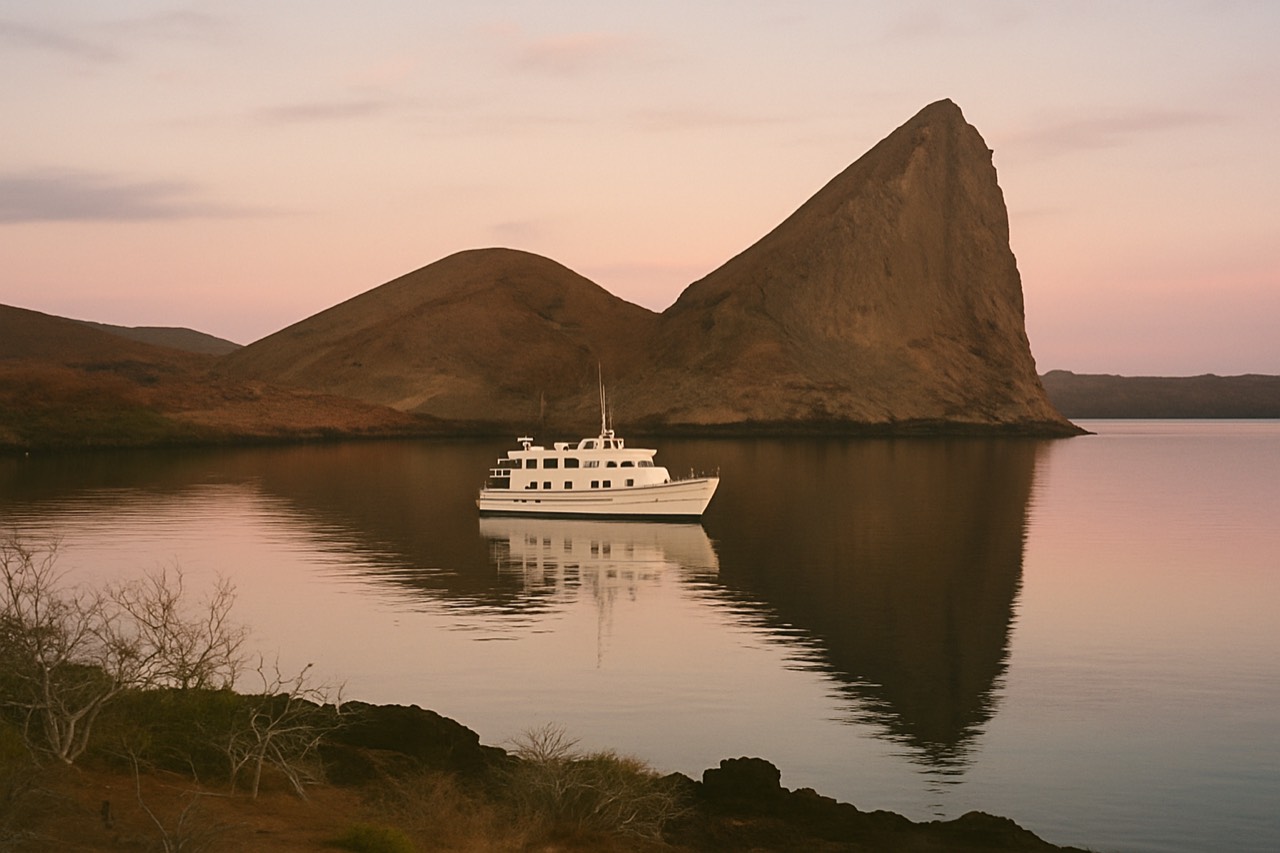
About 79% of Galapagos visitors stay on land and 21% sleep on a vessel. A cruise delivers more guided hours because it travels overnight, but land packages from $689 undercut cruises from $4,500 and suit travellers who want flexibility. The right choice depends on your budget, stomach and target islands.
The Galapagos park service counts where every visitor sleeps, and the answer surprises most first-time planners: in both 2024 and 2025, 79% of visitors stayed on land and only 21% slept on board a vessel. Island hopping is not the budget fallback the cruise brochures imply. It is how four out of five people actually see the archipelago, and the split has not moved in two years, according to the park's annual visitor report.
That does not make one format better. It makes them different products solving different problems, and the difference can be counted in hours rather than argued in opinions. This guide does the counting, then looks at cost, wildlife access, seasickness and the traveller each format genuinely suits. If you want the broader pricing picture first, the Galapagos package cost breakdown covers the fees every format shares.
Cruise Vs Island Hopping: What Actually Changes Between The Two?
The core difference is where you sleep and when you travel. A cruise moves between visitor sites overnight while you sleep, so every morning begins at a new anchorage with a full day of guided landings ahead. A land package bases you in hotels on the inhabited islands and spends daylight hours on speedboat transfers, which means the same eight days buy fewer guided hours in the park but more freedom to wander towns, choose restaurants and rest.
Everything else follows from that single mechanical difference. A cruise is a moving hotel: meals, guides and excursions are bundled, the itinerary is fixed by the park, and there is nothing to plan day to day. A land package is a sequence of day tours stitched together with ferry crossings and hotel nights, usually with breakfast and lunch included and evenings free.
Neither format is improvised. Both run under the same park rules: visits happen only at authorised sites among the 176 the park manages, and a licensed naturalist guide must accompany groups at protected sites under the visit rules in force since August 2026. The choice is not guided versus unguided. It is whether the boat carries you between sites while you sleep or whether you spend part of each day getting there.
How Many Guided Island Hours Does Each Format Actually Deliver?
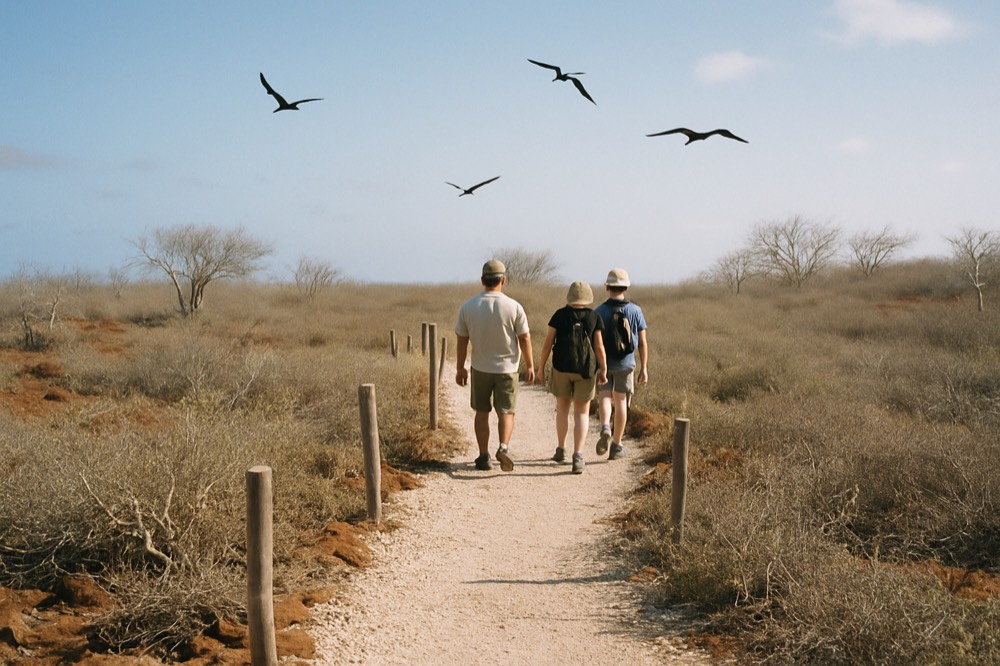
An eight-day cruise typically delivers roughly twice the guided island time of an eight-day land trip, because the sailing happens at night. A cruise guest wakes at a new site, does a morning landing, returns for lunch, then takes an afternoon snorkel or walk, repeating daily. A land guest spends two to four daylight hours on several days just moving between islands by speedboat, hours a cruise guest spends ashore or resting.
The arithmetic is blunt. Suppose a land itinerary includes three inter-island ferry days, each costing about three hours of travel plus waiting at the dock, plus hotel check-ins and town transfers. That is nine to twelve hours of the trip spent purely in transit. A cruise guest on the same dates spends those hours sleeping through the crossing, and the park's fixed itineraries mean the boat arrives at the next landing site before breakfast.
The park's own permit structure explains why cruise days are so dense. A cruise permit carries at most 16 passengers and a vessel at most 64, per the special tourism regulation in force since 2016, and itineraries are approved day by day with no modification allowed except by explicit park authorisation. The schedule you book is the schedule you sail.
| Time block | Eight-day cruise | Eight-day land package |
|---|---|---|
| Overnight | Travelling between sites while asleep | In a hotel, not moving |
| Early morning | Panga ride to the first landing | Ferry check-in or hotel breakfast |
| Midday | Lunch on board, repositioning | Ferry crossing on transfer days |
| Afternoon | Second landing or snorkel site | Guided day tour, if scheduled |
| Evening | Dinner on board, briefing for tomorrow | Free time in town, dinner on your own |
Both formats have a real price for those hours. Cruise guests trade freedom for density: you cannot skip a landing, and evenings belong to the boat. Land guests trade hours for autonomy: you can add a free afternoon in Puerto Ayora or skip a tour, but you pay for the privilege in transit time. Travellers who have done both say so plainly in recent threads, one calling the cruise "vastly superior in every way", another preferring the land portion for its flexibility, which is about as honest a split as this debate ever produces.
If the hours argument already decides it for you, these three eight-day options show the contrast in one glance, two land-based and one cruise:
What Does Each Format Include, And What Is Extra Either Way?
Cruise packages bundle nearly everything: cabin, all meals, guided landings and snorkel excursions. Land packages typically include hotels, breakfast and lunch, guided day tours and some transfers, with dinners and inter-island logistics varying by listing. Either way, the $200 park entry fee and the $20 transit control card are extra on most packages, paid in cash US dollars at the airport for the park fee, and flights are excluded unless the listing says otherwise.
The inclusions gap is narrower than the price gap suggests. A cruise from $4,500 and a land package from $689 sound like different worlds, but the cruise feeds you three meals a day for a week while the land guest buys dinners and often a few extras. Wetsuit and snorkel rentals, drinks and tips sit outside the headline price in both formats, and travellers consistently report that the real total lands above the advertised base once those are added.
| Included | Cruise package | Land package |
|---|---|---|
| Accommodation | Cabin on board | Hotels on inhabited islands |
| Meals | All meals on most listings | Breakfast and lunch on most listings |
| Guided visits | Every landing, guide included | Day tours with guide included |
| Transfers | Boat repositions overnight | Speedboat ferries on transfer days |
| Park fee ($200) and TCT ($20) | Usually extra | Usually extra |
| Flights from mainland | Excluded unless stated | Excluded unless stated |
Two practical notes apply to both. The park fee is collected in cash by rangers at Baltra or San Cristobal airport, and there is no official online prepayment portal, so arrive with clean US notes. The transit card is bought at the counter in Quito or Guayaquil before check-in, with free online pre-registration speeding the process, and you cannot fly to Galapagos on a one-way ticket. The flights, park fee and transit card guide walks through the full sequence.
What Does Each Format Cost Per Person For The Same Week?
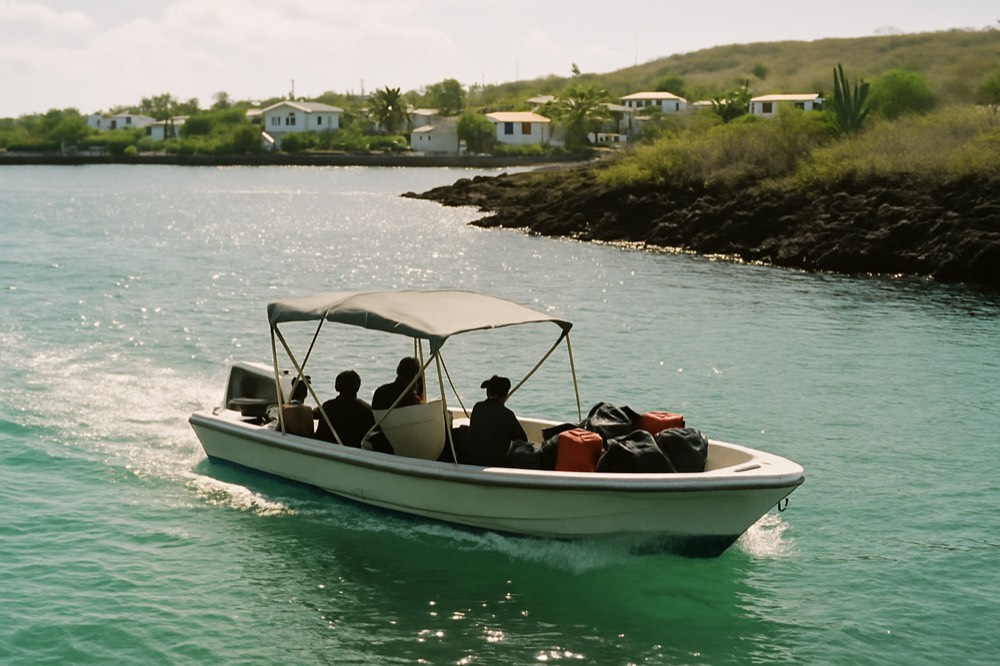
Land packages win on headline price. Eight-day land itineraries on this site run from about $1,829 to $2,898, while the cruise roster starts at $4,500 and runs to $8,066 for a seven-day small-ship route. Industry analysis puts mid-tier land-based trips roughly $800 to $1,000 below comparable cruise tiers, though land guests claw some of that back in dinners, rentals and ferry-day extras. Per guided hour, the cruise gap narrows.
The honest comparison is per person, per week, all in. Take the 8-Day Island Hopping Adventure Expedition, from $2,400 with a 5.0 rating across 17 reviews, the largest review pool among the eight-day land options here. Add the $200 park fee, the $20 transit card, mainland flights and a week of dinners, and the realistic land total sits in the low three thousands before airfare.
Now the cruise side. The 7-Day La Pinta route, from $8,066 with a 5.0 rating across 48 reviews, is the premium end of this roster, but its price covers the cabin, every meal and every guided landing for the week. The budget cruise floor on this site is the 5-Day Seaman Journey from $4,500, which carries no reviews yet, so treat it as an untested price point rather than a proven bargain.
| Package | Format | From (per person) | Rating and reviews |
|---|---|---|---|
| 8-Day Island Hopping Adventure Expedition | Land, small group | $2,400 | 5.0 across 17 reviews |
| 8-Day Galapagos Adventure, San Cristobal, Santa Cruz and Isabela | Land, small group, all meals | $2,363 | 4.9 across 12 reviews |
| 5-Day Seaman Journey Luxury Cruise | Cruise, full board | $4,500 | No reviews yet |
| 7-Day Isabela II Natural Selection Journey | Cruise, small group | $6,137 | 4.9 across 31 reviews |
| 7-Day La Pinta Darwin's Legacy | Cruise, standard | $8,066 | 5.0 across 48 reviews |
Every price above is per person and comes from the operator's live listing. The $8,066 cruise should not stand in for a typical cruise, and the $689 four-day bay tour should not stand in for a typical land week; the medians sit well inside those extremes. For month-by-month price movement, the Galapagos cruise deals guide tracks the discounting pattern.
Which Wildlife And Islands Can Each Format Actually Reach?
Cruises reach the remote western islands, especially Fernandina and the outer Isabela coast, which no day tour from the inhabited islands can visit. Land packages reach the inhabited islands plus nearby sites like Santa Fe, North Seymour and Bartolome by day boat, and they can reach Florena and Espanola only if the itinerary lists them. If Fernandina's flightless cormorants or the western penguin colonies are the goal, the cruise is not a preference, it is a requirement.
The geography is unforgiving. Fernandina appears in the confirmed stops of cruise routes like the Isabela II western route and La Pinta, and in land itineraries only where the listing itself confirms a stop, which on this roster means a few packages that include it as a confirmed visit. The penguin and cormorant counts tell you why it matters: the 2024 census recorded 413 penguins and 762 cormorants, concentrated around Isabela and Fernandina where the cold upwelling feeds them. The rest of the planning pages sit on Galapagos Islands Tour Packages.
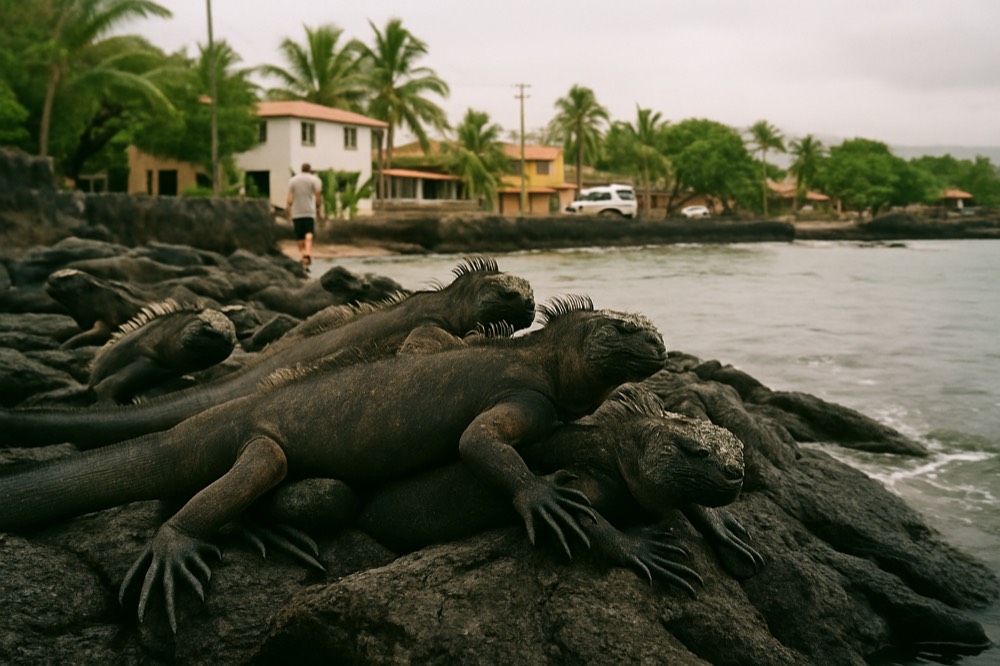
Land packages are not wildlife-poor, they are wildlife-different. Santa Fe land iguanas, North Seymour's frigatebirds and booby colonies, Bartolome's viewpoint and the Santa Cruz highlands tortoise reserves are all day-tour territory from Puerto Ayora. The giant tortoise breeding centres are on the inhabited islands, and the park now requires advance QR reservations for the Fausto Llerena, Arnaldo Tupiza and David Rodriguez centres plus Las Grietas and Volcan Chico, which only registered local operators can book. That is one quiet argument for packages over independent travel: the reservation has to come from an agency registered in the province.
How Rough Are The Crossings In Each Format?
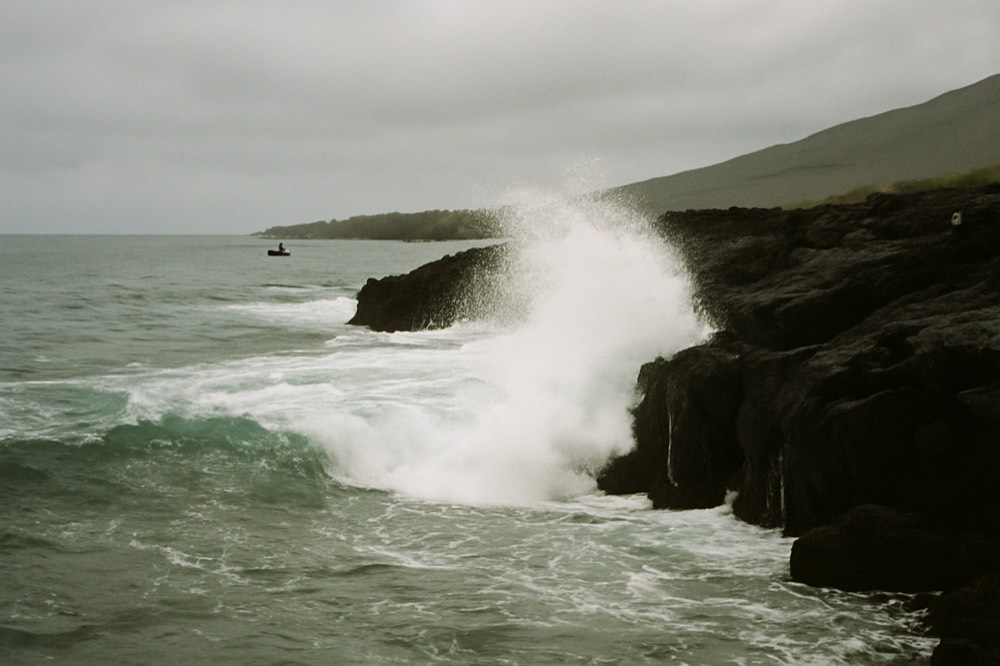
The cool season, June to December, is the rougher half of the year because the southeasterly trade winds strengthen, and the hot season, January to May, is calmer. Land packages feel this more, since travellers report the inter-island public ferries, especially Santa Cruz to Isabela, as the roughest legs in either format. No reliable wave-height figure exists for Galapagos waters, so plan on season and wind, not on swell statistics.
The sea temperature cycle tracks the same pattern: 25.7 degrees Celsius in March against 21.5 in August and September at Puerto Ayora, per the Charles Darwin Foundation climatology record. Warmer months mean calmer, clearer water and better snorkelling comfort. Cooler months mean richer feeding, more marine activity and choppier decks, which is the trade the cool season asks of you.
Cruise guests mostly sleep through the crossings, but the long western transits toward Fernandina draw more swell complaints than eastern and central routes. Travellers who suffer motion sickness consistently give the same advice: start medication the night before, not the morning of, and pick a catamaran or a midship upper-deck cabin if the budget allows. Lower-deck cabins near the engine draw repeated complaints about noise and fuel smell, which is worth remembering when a cheap cabin category looks tempting.
Who Should Choose A Cruise, Honestly?
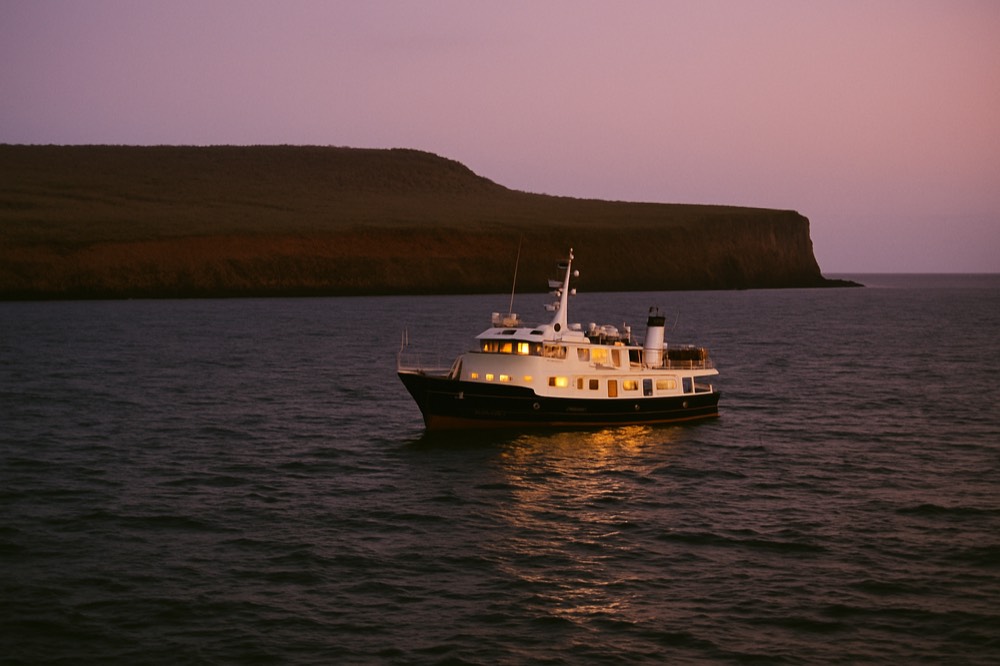
Choose a cruise if remote islands, maximum guided hours or all-inclusive simplicity top your list, and your budget reaches from about $4,500 up. It suits travellers who want the itinerary decided, the wildlife dense and the logistics invisible, and it is the only format that reaches Fernandina's untouched coast. It suits you less if you get seasick easily, want evenings in town, or are pricing a family of four, where the per-person gap multiplies fast.
The cruise's hidden strength is that its itineraries cannot move. Only vessels under 20 passengers may change itinerary at all under the park management plan, and larger ships only in proven force majeure, so what you book is what you sail. That rigidity is a feature when you have matched a route to the islands you want, and a liability if your dates shift. The Galapagos cruise itineraries guide explains how to read a route map before paying.
Who Should Choose Island Hopping, Honestly?
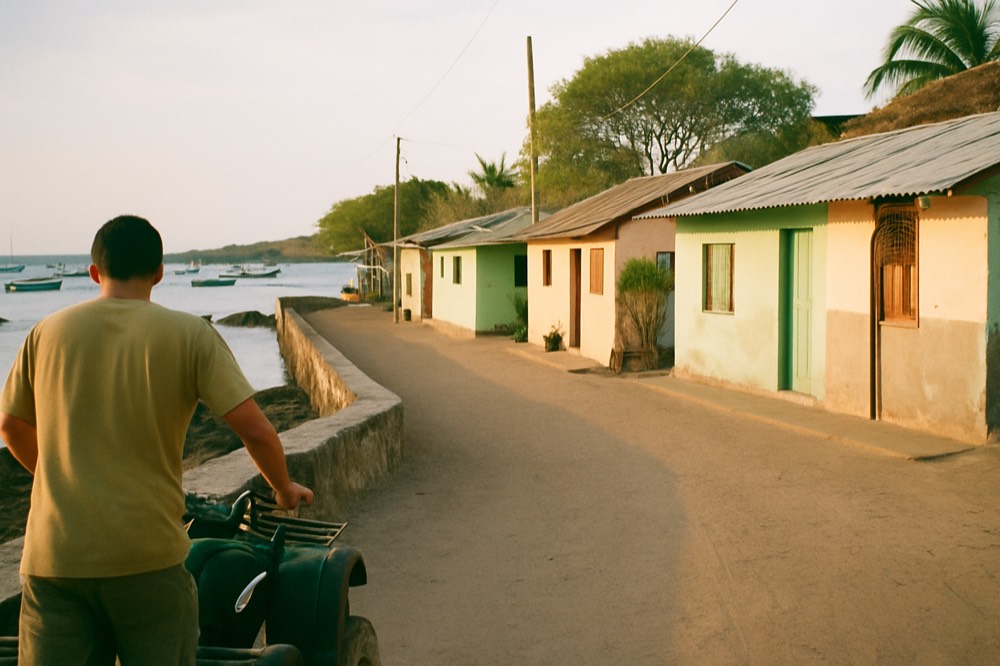
Choose a land package if budget, flexibility or firm ground matters most, since eight-day land options start near $1,829 against $4,500 for the cheapest cruise here. It suits travellers who want evenings in Puerto Ayora or Puerto Villamil, families who need downtime, and anyone wary of sleeping at sea. Accept the cost: fewer guided hours, ferry days lost to transit, and no access to the far western islands.
The land format's best version is a well-built small-group itinerary rather than a loose chain of day tours. The 8-Day Galapagos Adventure covering San Cristobal, Santa Cruz and Isabela runs from $2,363 with a 4.9 rating across 12 reviews, includes all meals and hotel pickup, and keeps the group small. It is the closest a land package gets to cruise-style cohesion while still giving you a bed on solid ground each night.
Families and seniors often land here for practical reasons: a hotel room beats a lower-deck cabin, restless children get a town to explore, and a rest day can be inserted without wasting a paid cruise night. The Galapagos family packages guide and the seniors guide take that comparison further.
Can You Mix Both Formats In One Trip?
Yes, and it is a legitimate strategy. Some travellers book a short cruise for the remote islands and add land nights on Santa Cruz or Isabela before or after, getting the western sites plus town time. The constraint is the park's 60-day annual stay limit and the fixed cruise dates, so the cruise dates anchor the plan. Cost sits between the two pure formats, and you pay the park fee only once per entry.
The mix works best when the cruise handles what land cannot: Fernandina, the western Isabela coast, or Espanola if no land itinerary covers it. Then the land segment handles the relaxed half, the highlands tortoise reserves, the Charles Darwin Research Station and free beach days. Package builders exist on this roster too, such as mainland-plus-Galapagos combos, but a cruise-plus-land mix is usually assembled as two bookings.
One warning from the fresh fleet news: vessels change hands and itineraries get reassigned, as when two Celebrity ships were sold and refitted under a new operator in 2025. Book the cruise segment first, confirm the vessel and route in writing, then wrap the land nights around it. The how to book a Galapagos package guide covers the confirmation checklist.
Making The Final Call Between Cruise And Land
Decide on three questions in order. First, which islands do you need, because Fernandina and the far west require a cruise. Second, what is the real budget per person including the $200 fee, flights and dinners, because the week-long gap runs from roughly $2,000 on land to $4,500-plus at sea. Third, how does your stomach handle open water, since a seasick cruiser enjoys nothing. Answer those and the format picks itself.
If you are still torn, weight the hours. The cruise buys you roughly double the guided island time by moving at night, and that time is the thing you actually came for. The land package buys you control: of evenings, of pace, of roughly $2,000 per person. Neither answer is wrong, which is exactly why 79% of visitors sleep on land while the 21% who sail see the islands almost nobody else does.
These three packages bracket the whole decision, one budget land option, one all-meals land option and the premium cruise contrast:
Common Questions About Cruise Vs Island Hopping In Galapagos
Is A Cruise Better Than Island Hopping In The Galapagos?
Neither is universally better. A cruise delivers more guided hours and reaches remote islands like Fernandina; island hopping costs less, from about $1,829 for eight days against $4,500-plus for cruises, and gives you evenings and flexibility. Choose by islands, budget and seasickness tolerance.
Why Do Most Visitors Choose Land-Based Packages?
Price and flexibility. The park's own data shows 79% of visitors stayed on land in both 2024 and 2025. Land packages cost substantially less per person and let travellers keep control of evenings and rest days, which matters to families and cautious spenders.
Can A Land-Based Tour Reach Fernandina?
Only if the specific listing confirms Fernandina as a stop, and on this roster a few land itineraries do list it. Day tours from the inhabited islands cannot reach it. If Fernandina's flightless cormorants and penguin coast are essential, verify the stop on the live listing before booking.
Is Island Hopping Cheaper Than A Cruise Once Everything Is Added?
Usually yes, but the gap narrows. Industry analysis puts mid-tier land trips roughly $800 to $1,000 below cruise equivalents. Land guests pay for dinners, some rentals and ferry-day extras, while cruise guests pay for everything up front plus tips.
Do Both Formats Pay The Same Park Fee?
Yes. The $200 foreign adult entry fee is paid in cash US dollars to rangers at Baltra or San Cristobal airport, and the $20 transit control card is bought at the mainland counter, regardless of whether you sleep on a boat or in a hotel.
Which Format Is Better If I Get Seasick?
Land, clearly. Cruise guests sleep aboard through open-water transits, and the cool season from June to December brings stronger winds and choppier seas. Land packages limit rough water to daytime ferry crossings, and you sleep on solid ground.