What Not To Bring To Galapagos?
The items biosecurity inspectors confiscate at Quito and Guayaquil airports, the plastics and sunscreens banned in the national park, and the gear that is better left at home on a Galapagos package trip.
 By Oleg Galeev, Editor
What Not To Bring To Galapagos?
The short answer is fresh food, seeds and soil, single-use plastics, drones, speakers, reef-toxic sunscreen, and anything you cannot carry yourself across a ferry deck. Galapagos biosecurity inspects every bag twice, at your mainland departure airport and again on arrival, and the rules inside the national park ban a second layer of items that are perfectly legal on the mainland.
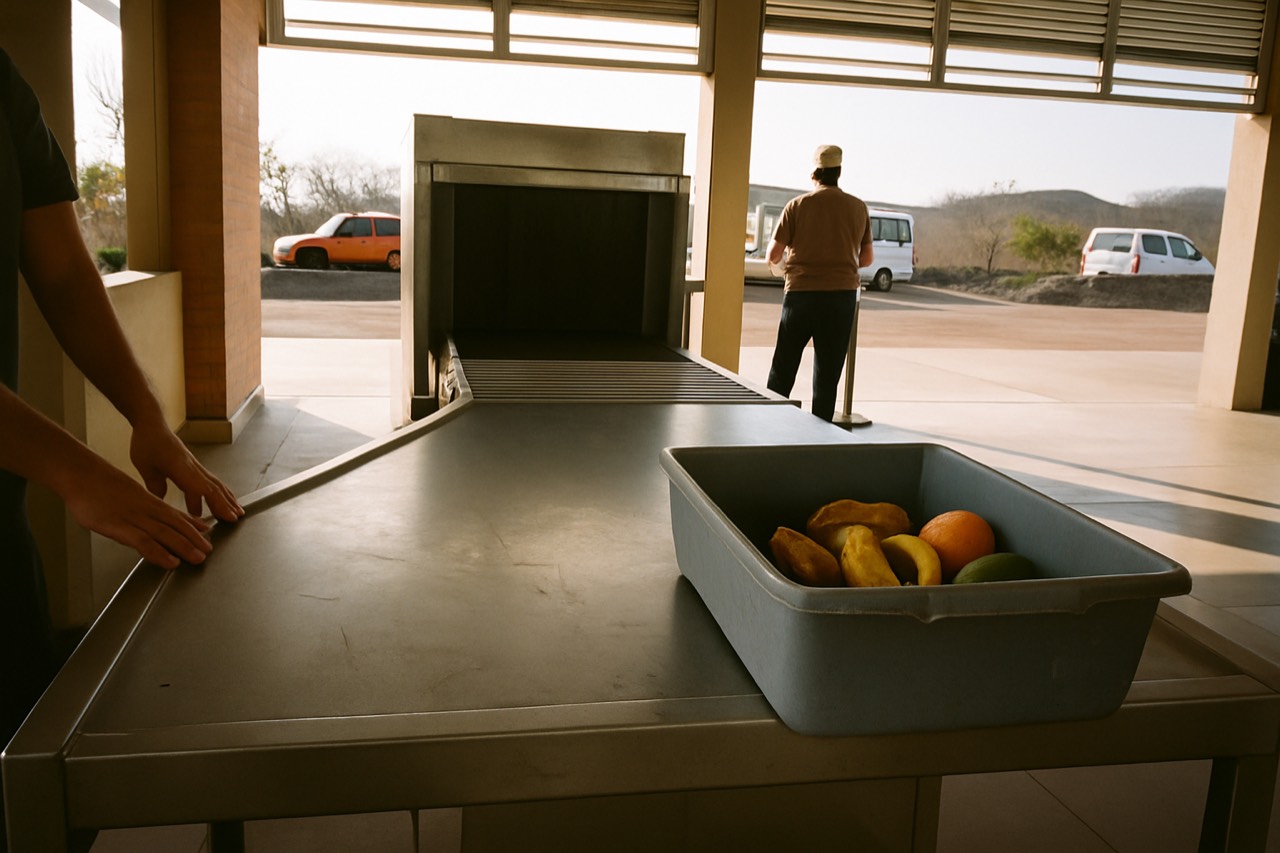
Most first-time visitors pack for the Galapagos the way they would pack for any beach destination, and then discover, usually standing in line at Quito or Guayaquil airport, that the archipelago has its own quarantine system. The agency is called the Agencia de Regulación y Control de la Bioseguridad y Cuarentena para Galápagos, or ABG, and its inspectors open bags at a dedicated biosecurity room before you even reach airline check-in. The same inspection happens again when you land at Baltra or San Cristobal, and a third time at the boarding docks if you travel between inhabited islands.
The reason is simple and worth understanding before you pack. The islands sit about 1,000 km from the South American continent, and 97% of the emerged land surface is protected national park. The native flora runs to roughly 500 vascular plant species with about 180 endemics, and the reptile fauna includes 36 species, every single one of them endemic. A single seed in a hiking boot tread or an orange peel in a carry-on is a genuine invasion risk in a place like that, so the rules are enforced rather than decorative.
This article walks through the confiscation list, the park rules that ban items you can legally own, the weight and space realities of inter-island travel, and what to bring instead. If you want the positive version of this list, the companion guide on what to pack for a Galapagos cruise covers the other side of the suitcase.
Why Does Biosecurity Confiscate Food And Seeds At The Airport?
Because the Galapagos Islands are a quarantine zone, and every bag is X-rayed and can be hand-searched before you fly. Fresh fruits, vegetables, meats, plants, soil and untreated plant products are the core confiscation list. Processed and packaged foods are generally fine. Arrive three hours before your flight, because the inspection adds real time to check-in.
The inspection is not a spot check. ABG describes a three-step procedure that every traveller passes through: check the official list of permitted products before packing, allow inspectors to examine baggage, and complete the sworn goods declaration, the Declaración Juramentada de Mercancías, and hand it to an inspector on arrival. Checked bags are typically sealed after inspection. The aircraft cabin is even fumigated before landing with a product tested and approved by the World Health Organization, and the airline announces it beforehand, which surprises people the first time they hear it.
The official regulated-products list uses a colour code. Green means permitted, foods processed to the point where they cannot carry pests, though still inspected for stowaways. Yellow means restricted, unprocessed items that may carry pests and are admitted only if specific requirements are met. Red means not permitted at all, unprocessed high-risk items the agency describes as highly aggressive to island ecosystems. You can read the framework on the official ABG products list rather than trusting a blog summary, including this one, for the item-by-item detail.
What this means in practice for a package buyer:
| Category | Examples | What happens |
|---|---|---|
| Fresh produce | Fruits, vegetables, fresh herbs | Confiscated at mainland inspection |
| Animal products | Fresh or uncooked meats, some dairy | Confiscated, high risk |
| Plant material | Seeds, cut flowers, untreated wood | Confiscated or restricted |
| Soil-contaminated items | Hiking boots with mud, used camping gear | Cleaned or refused |
| Sealed processed snacks | Biscuits, chocolate, instant noodles | Generally permitted |
One detail worth knowing: the inspection is repeated at the boarding docks of the populated ports before inter-island travel. Travellers who buy fruit at a Puerto Ayora market and then take the ferry to Isabela can lose it at the dock, because the inhabited islands are treated as separate quarantine units. If your package hops between islands, and most land-based packages do, the biosecurity line follows you around.
Which Plastics And Beach Items Are Banned?
Single-use plastics are banned across the Galapagos, including plastic bags, straws and bottles in many contexts, and the national park rules prohibit leaving any rubbish behind at all, everything you generate must be carried out of the protected area. Leave the disposable beach kit at home and bring refillable alternatives.
Ecuador has restricted single-use plastics nationally, and the Galapagos enforce the rules with more enthusiasm than the mainland, because plastic in the marine reserve is not litter, it is a threat to a 133,000 km² protected area created in 1986 and extended in 1998. Park rangers have the authority to act on plastic inside the protected areas, and tour operators will often enforce the rules before an inspector ever sees you, because their permits depend on it.
The current visit rules are worth reading for yourself. They are set out in Resolución MAE-PNG/DIR-2026-0044-RM of 12 August 2026, published in the Registro Oficial, and the full resolution is on the park's site. Beyond plastics, it prohibits alcohol, tobacco, vapes and fires in the protected areas, radios, speakers, megaphones and phone audio played out loud, with headphones only, and removing sand, coral, shells, volcanic rock, plant material, animal parts or endemic wood.
That last group catches beachcombers. Picking up a shell, a piece of volcanic rock or a dried piece of coral as a souvenir is prohibited, dead animals included, and writing or carving on rocks or trees is treated the same way. The mindset to pack for is a national park that happens to have beaches, not a beach resort that happens to have a park.
What Electronics And Gear Will Get You In Trouble?
Drones are the big one. Professional filming, drones, remote cameras and aerial or underwater rigs need prior authorization from the park directorate, so a holiday drone stays home. Speakers and any audio played out loud are prohibited in the protected areas, and flash photography is banned around wildlife.
The drone point deserves emphasis because drone owners routinely assume a vacation drone is fine. It is not. The resolution names drones explicitly among the equipment requiring prior DPNG authorization, and a traveller arriving with a drone in the bag has two options: leave it secured on the mainland or in a hotel, or apply for authorization well in advance through official channels. There is no walk-up permit at the airport.
Speakers are the second surprise. The rules prohibit radios, speakers, megaphones and phone audio inside the protected areas, and headphones are the only alternative. A portable Bluetooth speaker that is standard kit for a beach holiday anywhere else is contraband on a visitor site in the Galapagos. Guided groups move quietly for good reason: the wildlife is the point of the trip, and the park manages the experience accordingly.
Flash photography around animals is banned outright, and professional filming rigs, remote cameras and underwater housings used commercially all need prior authorization. For a normal traveller with a phone and a compact camera, none of this bites. For a content creator packing lights, a gimbal and a drone, the Galapagos are one of the least friendly destinations in the hemisphere, by deliberate design.
The park also sets minimum distances from wildlife, and camera gear counts toward them. Two metres while snorkelling, diving or walking, camera equipment included, and four metres from the shore and from animals during kayaking, stand-up paddle and panga rides. A long lens solves what proximity cannot, so the gear to bring is reach, not stealth.
What Should You Leave Out For Weight And Space Reasons?
Inter-island flights and ferries have tight luggage limits, and most land-based packages move you between islands by speedboat or small aircraft, where a large hard-shell suitcase is a liability. Pack a soft duffel or backpack you can lift onto a ferry deck, and check your specific airline's checked and carry-on limits before buying luggage.
The weight issue is the one nobody warns you about. Package itineraries that hop between San Cristobal, Santa Cruz and Isabela typically use the public inter-island speedboats, and those boats have no hold, no porter and no sympathy. Your bag travels at your feet on a wet deck, and you step on and off over water. A 26 kg wheeled monster that was fine on the international leg becomes an obstacle on the Santa Cruz to Isabela crossing, which travellers consistently report as the roughest leg of a land-based trip.
The biosecurity angle compounds it. Because bags are opened, X-rayed and sometimes hand-searched, tightly compressed packing cubes and a dozen nested organisers slow you and the queue down. A single soft bag with obvious contents gets through inspection faster than a suitcase with hidden compartments.
What to cut:
| Leave behind | Why | Bring instead |
|---|---|---|
| Hard-shell suitcase | Awkward on ferries and small aircraft | Soft duffel or travel backpack |
| Full-size toiletries | Weight, and limited shower drainage on boats | Solid toiletries, small bottles |
| Hair dryer | Every hotel and boat supplies one or none needed | Nothing, the humidity wins |
| Second pair of jeans | Never worn in this climate | Quick-dry trousers |
| Bulky towels | Operators and hotels provide them | One packable microfibre towel |
| Snorkel gear rental debates | Rentals vary in quality, travellers report | Your own mask and snorkel |
The mask and snorkel line is the one place to spend your weight budget. Traveller reports repeatedly complain about rental snorkel quality and condition, and a personal mask that fits your face is small, light and used almost daily. Fins are the bulkier call, and most people rent those. If you are weighing a wetsuit, note that the water in Puerto Ayora averages 25.7 °C in March but 21.5 °C in August and September, so a shortie or a rented wetsuit earns its place in the cool season, and the same suit is dead weight in the hot season.
Which Sunscreens And Toiletries Are Restricted?
Sunscreens containing oxybenzone or octinoxate are restricted during water activities in the protected areas, which rules out a large share of the mainstream shelf. Bring a mineral, reef-safe formulation and check the active ingredients list, or you will be buying a replacement at island prices.
The restriction sits in article 4 of the current visit rules and applies specifically to water activities inside the national park and marine reserve, which on a Galapagos package means nearly every swim, snorkel and panga ride. Oxybenzone and octinoxate are the two named chemicals, and both are common in standard cosmetic sunscreens. The practical fix is a zinc oxide or titanium dioxide based product, applied generously, because the equatorial sun is not negotiable.
The full detail on formulations and what actually works in the islands is covered in the companion piece on what sunscreen you can use in the Galapagos Islands, which goes deeper than this article needs to. The short version for packing purposes: one reef-safe sunscreen, one after-sun, and as little else as the trip allows.
Other toiletries are mostly a weight question rather than a legal one, with two exceptions worth naming. Aerosols are poor kit on small boats, where ventilation is limited, and strong fragrances are antisocial around wildlife and in close group settings. Insect repellent is worth bringing rather than buying locally, and the same ingredient-checking logic applies if you plan to swim, since repellent on skin washes off into the same water the sunscreen rules are protecting.
What Money And Documents Should You Not Forget Instead?
Bring clean US dollar cash for the $200 park entrance fee, paid in cash to rangers on arrival at Baltra or San Cristobal, plus $20 for the Transit Control Card, and do not plan to prepay the park fee online, because no official prepayment portal exists. The wrong thing to bring is a wallet with no cash in it.
This is the inversion of the whole article: the mistakes travellers make are usually about what they left behind, not what they packed. The park entrance fee for a foreign adult is US $200, US $100 for a child under 12, and it is collected in cash, in US dollars, by park rangers at the airport on arrival. Cards are not reliably accepted. There is no official online prepayment portal for the park fee, and any site telling you to prepay it online is wrong.
The Transit Control Card, or TCT, is US $20 per person, bought at the CGREG counter at Quito or Guayaquil airport before airline check-in. Free online pre-registration exists and speeds up the counter visit, but individual travellers cannot complete the purchase online; advance purchase is limited to travel agencies. You also cannot fly to the Galapagos on a one-way ticket, because the transit rules require a personal, non-transferable return ticket between the continent and the province.
The full mechanics of fees, cards and the three-hour airport arrival window are laid out in the guide to Galapagos flights, the park fee and the transit card, which is worth reading before you book anything. For packing purposes, the takeaway is a cash strategy: clean, undamaged US notes, in the right denominations, accessible in your carry-on, because the fee is collected before you reach your checked bag.
What Should You Bring Instead Of The Banned Items?
A soft bag, a personal mask and snorkel, a reef-safe mineral sunscreen, quick-dry clothing in layers, cash for the park fee, and headphones. That kit covers every rule on this page and every practical complaint travellers actually report, from rough ferry decks to confiscated snacks.
The positive packing list is shorter than most people expect. The climate is mild, monthly mean air temperatures in Puerto Ayora run from 21.7 °C in September to 26.9 °C in March, so you need layers for cool-season evenings and boat decks, not winter gear. A light rain shell handles the garúa, the persistent drizzle that sits on the highlands from June to December. Sturdy walking shoes matter for lava terrain, a question covered in detail elsewhere on this site.
Motion-sickness medication belongs in the carry-on rather than the checked bag, started the night before a ferry crossing according to the travellers who report it working. The cool season, June to December, is when the southeasterly trade winds strengthen, and that is the documented physical basis for rougher crossings in the second half of the year. The honest answer on sea state is that the archipelago has no working wave buoy, so nobody can quote you a swell figure, but the seasonal wind pattern is real and consistent.
A package that suits your luggage philosophy is worth choosing deliberately. The Five-Island Adventure, 8-Day Island Hopping Tour runs from $2,830, holds a 5 rating from a single review, includes breakfast and lunch, and moves in small groups, which keeps the ferry-and-bus logistics manageable with one duffel. If your packing style is more hotel-and-less-adventure, an operator with hotel-based nights and a fixed meeting point spares you the dock scramble entirely.
By contrast, a liveaboard cruise such as the 7-Day La Pinta itinerary, from $8,066 and rated 5 across 48 reviews, changes the packing question completely: you unpack once and the boat carries everything, though the biosecurity inspection at the mainland airport applies exactly the same. The trade-off is price and the fixed itinerary, which by law cannot be modified for vessels over 20 passengers except in proven force majeure. Neither style of trip rescues you from the confiscated-orange problem, because every arrival into the province passes the same ABG line.
Common Questions About What Not To Bring To Galapagos
What Not To Bring To Galapagos?
Fresh fruits, vegetables, meats, seeds, plants and soil-contaminated items are confiscated at biosecurity. Single-use plastics, drones without prior park authorization, speakers, reef-toxic sunscreens containing oxybenzone or octinoxate, and shells or volcanic rock collected as souvenirs are all banned in the protected areas.
Can I Bring Snacks Into The Galapagos?
Sealed, processed snacks such as biscuits, chocolate and instant noodles are generally permitted under the green category of the ABG regulated-products list. Fresh or unprocessed food is not. The list is colour-coded green, yellow and red, and inspectors make the final call at the airport.
Do They Check Your Bags Going To The Galapagos?
Yes, twice on the way in. ABG inspects checked and carry-on baggage at a dedicated room in Quito or Guayaquil airport before airline check-in, and again on arrival at Baltra or San Cristobal. Inter-island travel is inspected at the boarding docks too. Arrive three hours before your flight.
Can I Bring A Drone To The Galapagos?
Not without prior authorization from the Galapagos National Park Directorate. Drones, professional filming rigs, remote cameras and aerial or underwater rigs are all named in the current visit rules as requiring advance permission. A holiday drone is best left at home.
What Sunscreen Is Not Allowed In The Galapagos?
Sunscreens containing oxybenzone or octinoxate are restricted during water activities in the protected areas. Bring a mineral sunscreen based on zinc oxide or titanium dioxide instead, and check the active ingredients before you pack.
How Much Cash Should I Bring To The Galapagos?
At minimum, US $200 per foreign adult, or US $100 per child under 12, for the park entrance fee paid in cash to rangers on arrival, plus US $20 per person for the Transit Control Card. Clean, undamaged US notes in your carry-on are the safe approach, since cards are not reliably accepted for the fee.
The pattern across everything on this page is the same: the Galapagos are a protected area first and a destination second, and the packing list follows the protection. Every item that gets confiscated or banned at the border exists because a 97%-park archipelago 1,000 km offshore cannot afford the small mistakes a mainland beach tolerates. Pack light, pack sealed, pack mineral, and the whole inspection becomes a two-minute formality on the way to the good part. For more help choosing the trip itself, Galapagos Islands Tour Packages covers the full range of multi-day options.