Galapagos Cruise Packages: Ship Classes, Cabin Counts And Real Costs
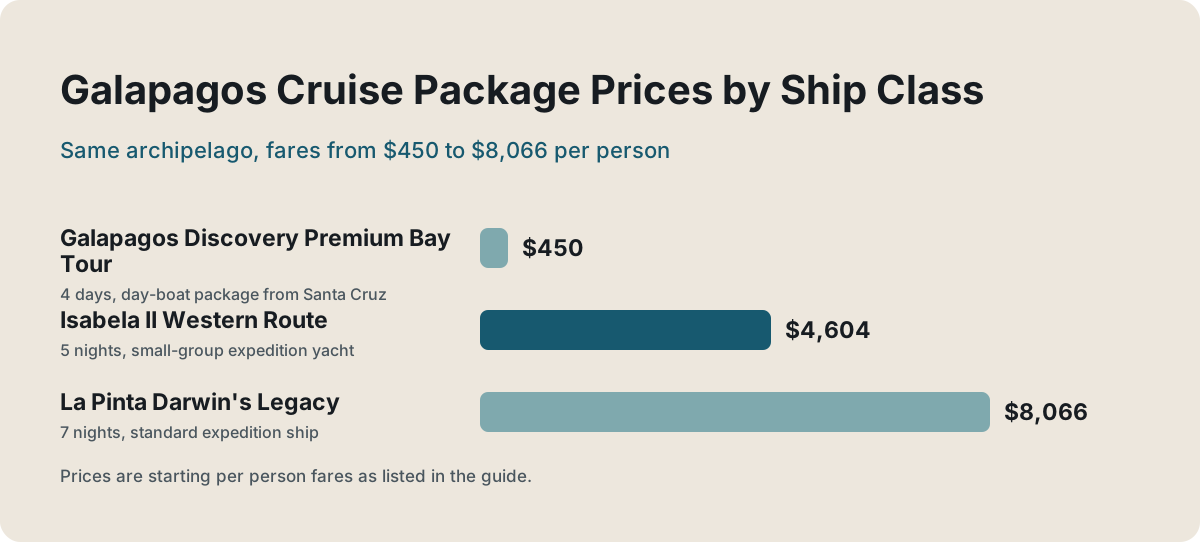
The Galapagos cruise market sells the same stretch of islands at three different prices on three different hulls. This guide sorts the packages by what actually changes the trip: ship class, passenger count and the permit structure behind every fixed itinerary.
Short answer
Galapagos cruise packages run from about $450 for a four day bay tour to $8,066 for a seven day, 48 guest expedition ship, with most multi-day cruises between $3,500 and $6,200 per person. Select by ship class and cabin count first, then by the islands each itinerary is permitted to visit.
This guide from Galapagos Islands Tour Packages sorts multi-day Galapagos cruise packages by the three things that actually move the price and the experience: ship class, passenger count and the permit structure that fixes every itinerary. Four out of five visitors to the islands stay on land, but for the 21 percent who board a vessel, the choice of hull decides which of the 176 authorised visitor sites they reach. That split matters more than any brochure adjective, and it explains why the same western loop can carry three different prices on three different ships.
What Are The Three Ship Classes Of Galapagos Cruise Packages?
Most multi-day Galapagos cruise packages fall into three practical classes: small expedition yachts carrying one tour group per permit, larger expedition vessels running several groups in rotation, and short day-boat packages that sleep ashore near Santa Cruz. The difference is not luxury language. It changes which islands you reach, how many people share a landing beach and how much you pay per cabin night.
The roster on this page carries the distinction in its own tags. The Isabela II Western Route is labelled small-group, La Pinta Darwin's Legacy is labelled standard, and the four day Discovery Premium bay tour is standard but stays near the populated port of Puerto Ayora. Each class operates under a different part of the same permit table, which is where the real differences live.
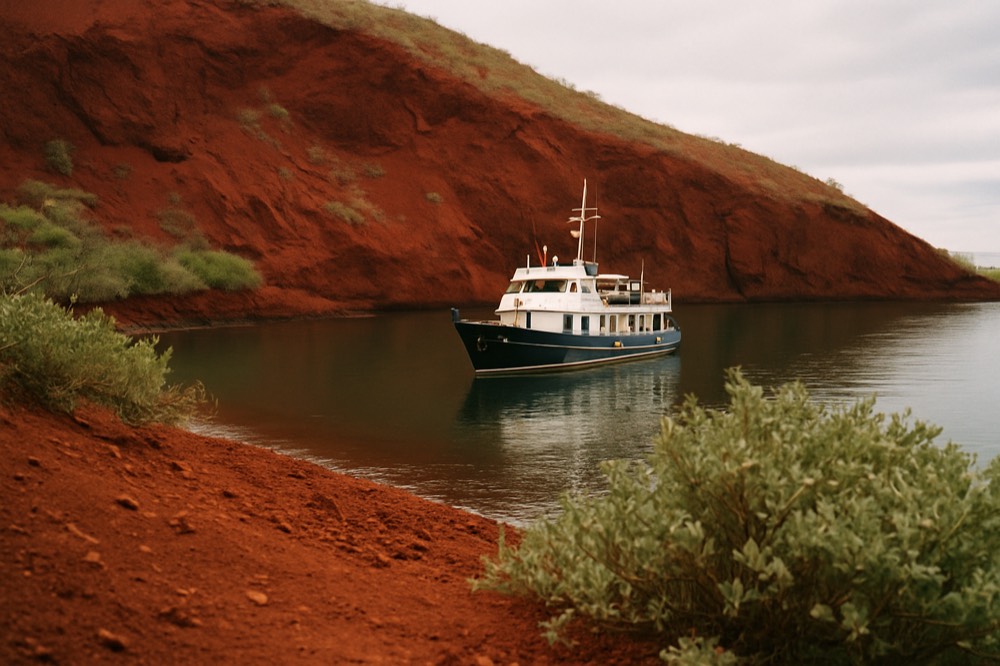
A small-group yacht arrives at a landing site with one zodiac and one guide group. A larger vessel splits its complement and staggers departures, so the same beach may be visited by several small groups over the course of a morning. Neither is better in the abstract, but the rhythm of the trip changes, and so does the per-night fare. Understanding the class before comparing prices prevents the common mistake of lining up a 16-guest yacht against a 64-guest ship as if they were the same product.
How Do Small Ships And Expedition Vessels Compare On Price?
On this roster the same five to seven day loop costs roughly $4,604 per person on a small-group expedition vessel, about $8,066 per person on a standard expedition ship, and from $450 for a four day bay tour that stays near Santa Cruz. Ship class, not brochure adjectives, drives the spread. Larger hulls cost more because they carry more crew and more hotel services, not because they see more wildlife.
The price gap is not a quality signal. The Isabela II Western Route at $4,604 carries a 5.0 rating from 24 reviews, while La Pinta Darwin's Legacy at $8,066 carries 5.0 from 48 reviews. Both are small or standard vessels doing essentially the same job in the same waters, and the fare difference mostly buys space and staffing, not extra animals. The bay tour at $450 is the honest outlier, a different product that sleeps on land and uses day boats, which is why it lands so far below the liveaboard fleet.
| Package | Class | From per person | Nights | Rating |
|---|---|---|---|---|
| Isabela II Western Route | small-group expedition yacht | $4,604 | 5 | 5.0 from 24 reviews |
| La Pinta Darwin's Legacy | standard expedition ship | $8,066 | 7 | 5.0 from 48 reviews |
| Galapagos Discovery Premium Bay Tour | day-boat package from Santa Cruz | $450 | 4 | 4.9 from 24 reviews |
The takeaway is that the same archipelago visit spans a seventeen-fold price range, and most of that range is explained by where you sleep and how the boat is crewed. A buyer who only compares fares will drift toward the $450 bay tour and then wonder why the western islands never appear on the schedule.
What Does A Galapagos Cruise Fare Include, And What Costs Extra?
Most published Galapagos cruise fares cover the cabin, onboard meals and guided shore excursions, though meal inclusions vary from listing to listing. They rarely include the $200 national park entrance fee, the $20 transit control card, mainland flights, crew tips or wetsuit rentals. Budget those extras in cash before comparing two prices, because a lower fare with more exclusions is not automatically cheaper.
The park entrance fee is the single biggest add-on that every visitor pays. Foreign adults over 12 owe US $200, paid in cash to park rangers on arrival at Baltra or San Cristóbal airport. There is no online prepayment portal. The $20 transit control card is bought at the CGREG counter at Quito or Guayaquil airport before airline check-in, and the online option is pre-registration only, not purchase for a solo traveller. The official CGREG FAQ confirms that advance purchase of the TCT is open to travel agencies but not to individual passengers.
The roster discloses meal coverage unevenly. The five day Seaman Journey and the private five day cruise both list breakfast, lunch and dinner included. The Isabela II and La Pinta listings do not state their meal terms, so a buyer should ask rather than assume full board. Wetsuit and snorkel rentals are not stated on most listings, and recent traveller reports mention them as a recurring line item.
| Cost | Amount | When it is paid |
|---|---|---|
| Park entrance fee, foreign adult | $200 | Cash to rangers at Baltra or San Cristóbal on arrival |
| Transit control card | $20 | CGREG counter at Quito or Guayaquil before check-in |
| Mainland flights | not stated | Before travel |
| Crew and guide tips | not stated | On board, customs vary |
| Wetsuit and gear rental | not stated | On board, where not included |
A practical rule of thumb falls out of this table. If two packages look similar except for a few hundred dollars in the fare, look at what each one includes before deciding, because the extras are identical for both.
Which Islands Do Galapagos Cruise Packages Visit?
A western itinerary typically strings Bartolomé, Santiago, Isabela and Fernandina, often with North Seymour and Santa Cruz. An eastern or southern one spends more nights around San Cristóbal, Floreana and Española. The park authorises 176 visitor sites in total, 91 marine and 85 terrestrial, and every cruise day must match a pre-approved site list. No vessel can improvise.
The fixed nature of these itineraries is not operator stubbornness. Under the park's rules, a cruise itinerary is approved site by site, and DPNG authorisation documents state explicitly that an approved route may not be modified under any concept without park approval. For a buyer that means the island list on the brochure is the island list on the water, and a ship swap at the last moment would need a new authorisation.
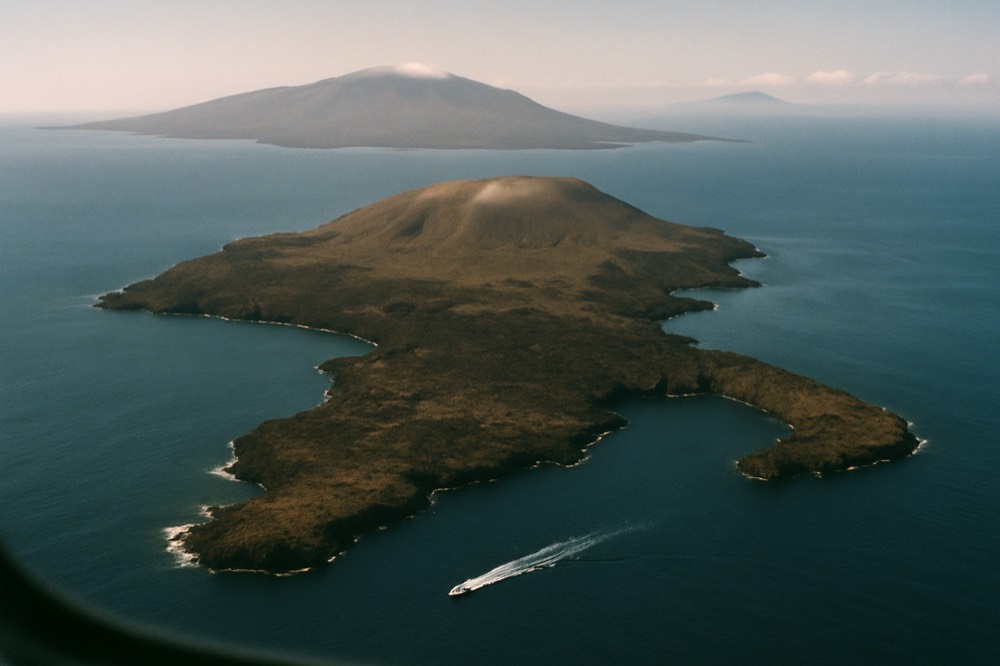
The DPNG visitor site registry counts 176 sites across the archipelago, and a cruise ship touches only a fraction of them in a week. The 2014 management plan introduced 15-day itineraries as the tool for spreading that load, and vessels cycle through pre-assigned routes so that no single site is overused. That is why the Isabela II Western Route and La Pinta Darwin's Legacy look different on paper despite both being seven-day-class products: one is built around the western volcanoes, the other spreads across the southern and western archipelagos.
| Itinerary shape | Islands typically included | Example package |
|---|---|---|
| Western loop | Bartolomé, Isabela, Fernandina, Santiago, Santa Cruz | Isabela II Western Route |
| Southern and eastern | San Cristóbal, Floreana, Española, Santa Cruz | Private 5-Day Cruise |
| Broad multi-island | San Cristóbal, Santa Cruz, Isabela, Fernandina, Rábida | La Pinta Darwin's Legacy |
The Isabela II Western Route, a five day small-group cruise from $4,604 per person with a 5.0 rating across 24 reviews, runs Bartolomé, Santiago, Isabela and Fernandina. Check availability
If the western islands and the penguin colonies around Fernandina and western Isabela are the reason for the trip, check that Fernandina appears in the confirmed stops before paying, not just in the marketing copy.
What Permit Rules Shape The Galapagos Cruise Fleet?
Ecuador's RETANP regulation caps a cruise permit at 16 passengers and a cruise vessel at 64. The 2014 park management plan sets a 100-passenger ceiling and allows only vessels under 20 passengers to change itinerary, and even then only in proven emergencies. A 64-berth ship is therefore running four separate 16-passenger permits. That is the real structure behind every Galapagos cruise brochure.
This permit table is the honest answer to the question of why the fleet looks the way it does. A vessel's size is not a marketing choice; it is a stack of legal permits, and the 100-passenger figure quoted across the industry is a ceiling in the park management plan, not a cap in the tourism regulation itself. The numbers that actually bind operators come from the Reglamento Especial de Turismo en Áreas Naturales Protegidas, Decreto Ejecutivo 827, article 33.
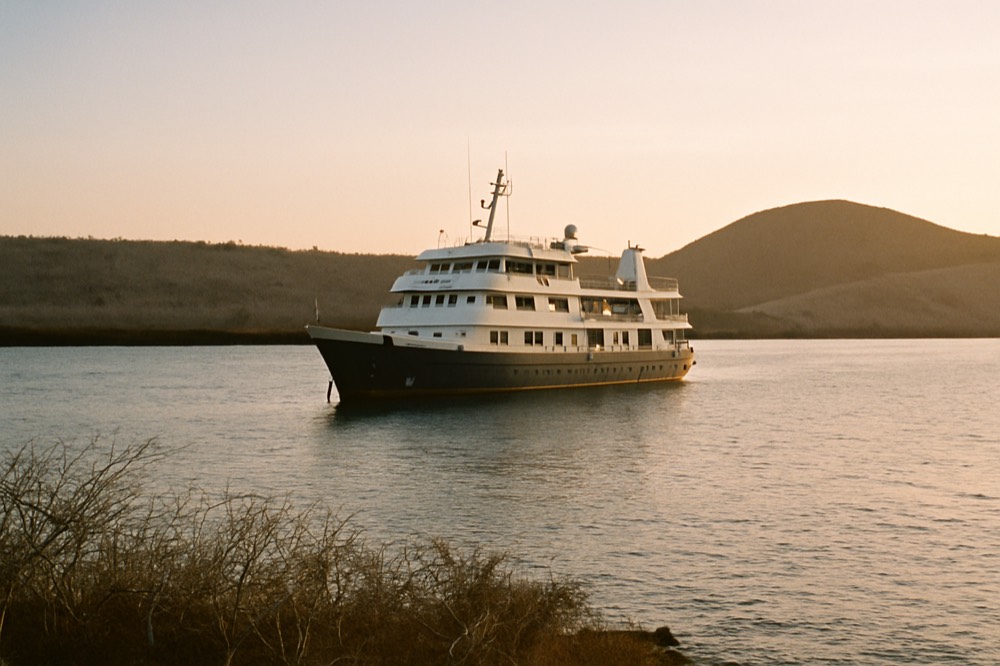
The 2014 management plan adds the itinerary-change threshold: only tourism vessels under 20 passengers may alter a route, and larger ships only in properly documented force majeure. On a big ship the itinerary genuinely cannot move, which is both a constraint and a promise. The plan also confirms that only vessels under that 20-passenger threshold have any flexibility at all, so the small-group and private tags on this roster carry legal weight beyond marketing.
| Tourism modality | Passengers per permit | Passengers per vessel |
|---|---|---|
| Multi-day cruise | 16 | 64 |
| Liveaboard dive cruise | 16 | 16 |
| Day tour with landings | 16 | 16 |
| Day dive tour | 12 | 12 |
Guides are compulsory on protected-area visits under the visit rules now in force, but the one-guide-per-sixteen-guests formula often repeated online is written for continental protected areas, not for Galapagos. The accurate facts are simpler: a permit carries at most 16 passengers, and a guide must accompany every protected-area visit.
How Do You Read A Ship's Real Size Before You Book?
Cabin count and guest capacity tell you more than the word luxury. A small-group yacht shares each landing with one group, while a standard ship splits into several groups and rotates zodiac departures. Check the vessel's stated capacity, not just the cabin photo. Lower decks near the engine draw the most complaints in recent traveller reports, so cabin position matters as much as cabin class.
The five cruise packages on this roster span three tags: small-group, standard and private. The private five day cruise at $3,560 from one review is a different proposition from a shared small-group yacht, because the whole permit is yours and the schedule bends around one party.
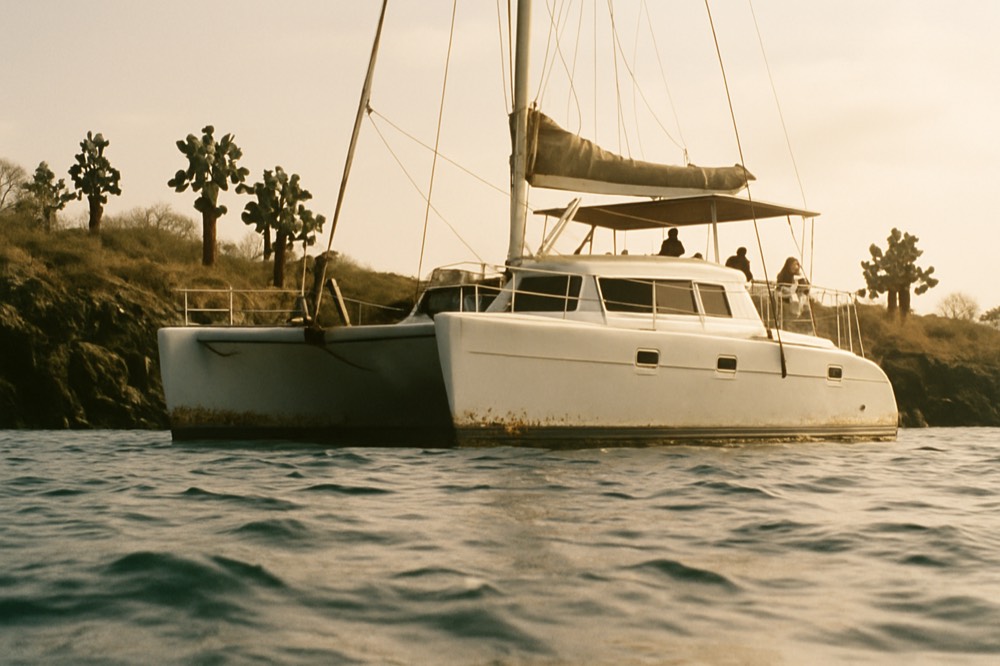
Recent traveller reports from the islands repeat the same practical warning: lower-deck cabins near the engine room earn the most complaints about noise and fuel smell. Upper-deck and midship cabins are preferred, and several reviewers say they would have paid more for them. Larger ships spread crew and machinery across more decks, so the noise problem is less acute, but on a smaller vessel the difference between an upper-deck cabin and one beside the engine is the difference between a good trip and a cabin you cannot sleep in.
| Cruise package | Class | Rating | From per person | Nights |
|---|---|---|---|---|
| Isabela II Western Route | small-group | 5.0 from 24 reviews | $4,604 | 5 |
| Isabela II Natural Selection Journey | small-group | 4.9 from 31 reviews | $6,137 | 7 |
| La Pinta Darwin's Legacy | standard | 5.0 from 48 reviews | $8,066 | 7 |
| Seaman Journey, Full Board | standard | no reviews yet | $4,500 | 5 |
| Private 5-Day Cruise, Full Board | private | 4.0 from 1 review | $3,560 | 5 |
The Seaman Journey at $4,500 with full board and hotel pickup has no reviews yet, which is itself useful information on a roster where the largest single review pool is 48. A traveller weighing it against the 31-review Natural Selection Journey should weigh the missing proof, not just the missing hundred dollars.
This is also where the liveaboard package distinction matters. A liveaboard cruise is the cabin you sleep in and the hull you sail on, not a different species of trip, and cabin position rides along with that choice.
What Hidden Costs Do Repeat Cruisers Warn About?
Beyond the fare, travellers report paying for the $200 park fee in cash at Baltra or San Cristóbal airport, a $20 transit control card at the Quito or Guayaquil counter, wetsuit and gear rentals, drinks, Wi-Fi and crew tips. Budget flights separately. Several recent reports also mention last minute vessel substitutions, so confirm the named ship at booking and ask what happens if hardware changes.
The hidden-extras list from the islands is unusually consistent across traveller threads and reviews. The park fee and transit card are the two non-negotiable items, both collected before or at the point of travel, and both in US dollars. The rest are softer but recur in review after review, and on a seven day sailing the cumulative effect of drinks, Wi-Fi and tips can push the real cost several hundred dollars past the published fare.
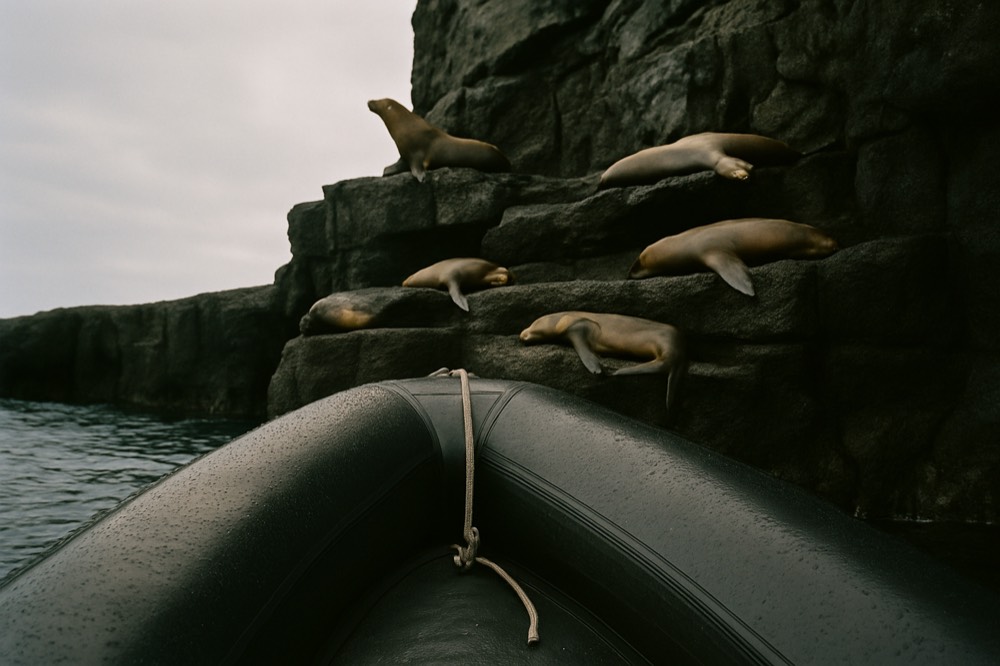
The seven day Isabela II Natural Selection Journey at $6,137 with a 4.9 rating from 31 reviews is the roster's most-reviewed small-group cruise, and it spans San Cristóbal, Santa Cruz, Isabela, North Seymour, Floreana, Española, Fernandina and Baltra. That breadth is why a seven-day fare looks rich against a five-day one: the extra nights buy western and southern stops that the shorter loop cannot reach.
The practical advice from repeat cruisers folds into one line: bring clean US cash for the park fee, start motion-sickness medication the night before if you are prone, and confirm the named ship in writing before the balance is due. For a fuller breakdown of what a package adds up to, the Galapagos package cost guide walks the same arithmetic with a calculator.
Which Galapagos Cruise Package Fits Your Travel Style?
Choose a 16 to 20 guest expedition yacht for the quietest landings and simplest logistics. Pick a standard or larger ship if you want more onboard space and are comfortable sharing sites in rotation. Short four or five day cruises suit tight schedules; seven days or more opens the western stops. Review counts on this roster are small, so read the written reviews, especially for lower deck cabins, before you commit.
The honest answer is that most travellers land somewhere in the middle. A five-day small-group cruise like the Isabela II Western Route covers the western highlights without the cost of a seven-day program, while the four-day bay tour suits someone who wants the landscape without the liveaboard life.
The season also shapes the choice. The cool season from June to December is when the southeasterly winds strengthen, and travellers consistently describe the inter-island crossings as rougher then. The warmer months from January to May see calmer conditions and the warmest water, peaking around 25.7 degrees Celsius in March against 21.5 in August and September. The Charles Darwin Foundation defines these two seasons by the wind strength, not by a fixed calendar, and a longer hot season can start earlier and finish later.
The cruise versus land-based comparison is worth reading before committing either way, because four out of five visitors never board a ship at all and the tradeoffs are real.
Common Questions About Galapagos Cruise Packages
Is A Galapagos Cruise Worth The Cost?
For travellers who want the western volcanoes, Fernandina and the penguin colonies, a cruise is the only practical way to reach those remote anchorages. On this roster the entry point is a five day small-group cruise from $4,604 per person, before the $200 park fee and $20 transit card. Travellers who only want Santa Cruz and Isabela can often build a land-based trip for less, which is why the value question depends entirely on the islands you need to see.
How Far In Advance Should I Book A Galapagos Cruise?
Demand peaks from March to April for foreign visitors and July to August for Ecuadorian travellers. September is the annual trough. Because the fleet runs fixed itineraries and ships are small, specific departure dates on the western loop can fill months ahead. Booking early is the reliable way to hold a named ship and cabin position, especially an upper-deck cabin.
Do Galapagos Cruise Packages Include Flights?
Most do not. Only one package on this roster, the four day Highlights tour from $2,299, lists roundtrip flights as included, and that product is a short land-based stay on San Cristóbal rather than a liveaboard cruise. The cruise packages here leave mainland flights to the traveller, so budget Quito or Guayaquil to Baltra or San Cristóbal separately.
What Is The Best Month For A Galapagos Cruise?
No single month is best for everything, but the two seasons differ clearly. The hot season from January to May brings warmer water, peaking around 25.7 degrees Celsius in March, and calmer crossings as the southeasterly winds weaken. The cool season from June to December strengthens those winds and produces rougher seas, but also more nutrient-rich water and active seabird life. Choose by comfort or by wildlife, not by a ranking.
Can I Do The Galapagos Without A Cruise?
Yes, and most visitors do: 79 percent stay on land and only 21 percent board a vessel, unchanged between 2024 and 2025. Land-based packages cover Santa Cruz, Isabela and San Cristóbal well, but they cannot match a liveaboard for the remote western sites like Fernandina and the outer anchorages. The choice is an island-list decision more than a budget one.