Galapagos Liveaboard Packages: Dive Boats, Naturalist Cruises And How They Differ
Dive liveaboards and naturalist cruises in the Galapagos run on separate permits, separate fleets and separate itineraries. One reaches Darwin and Wolf, the other never does. This guide explains the split, what each type costs and how to avoid booking the wrong one.
Short answer
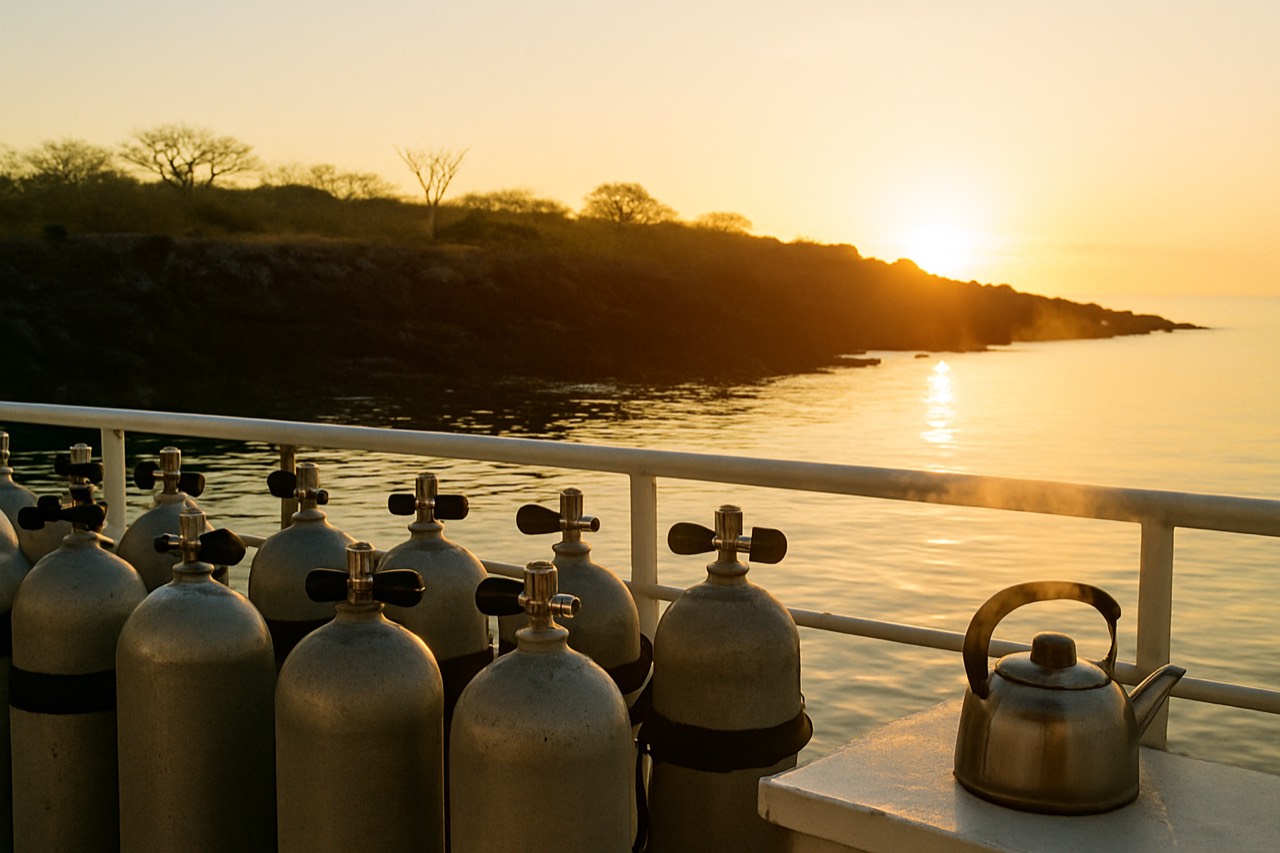
A Galapagos liveaboard package is a multi-day trip where you sleep on the boat. Dive liveaboards hold up to 16 passengers under a liveaboard dive permit and reach Darwin and Wolf; naturalist cruises hold up to 64 and never visit those sites. Diving packages on this site run from $1,545 per person.
What Is A Galapagos Liveaboard Package?
A liveaboard package is a multi-day Galapagos trip where the boat is your hotel: you sleep aboard, eat aboard and dive or make landings straight from the deck. Ecuadorian law splits these vessels into separate permit classes, dive liveaboards carrying at most 16 passengers and naturalist cruise vessels carrying at most 64, and the two classes run different itineraries to different islands.
The word gets used loosely across the travel web, and that looseness costs people real money. Some sites call any small-ship cruise a liveaboard. Others use it only for dive boats. In the Galapagos the distinction is not stylistic, it is legal: the tourism regulation that governs the national park, Decreto Ejecutivo 827, lists "Tour de Buceo Navegable", the liveaboard dive cruise, as its own modality with its own passenger limit, separate from "Tour de Crucero Navegable", the naturalist cruise. A vessel is licensed for one or the other, and its itinerary is approved for that class.
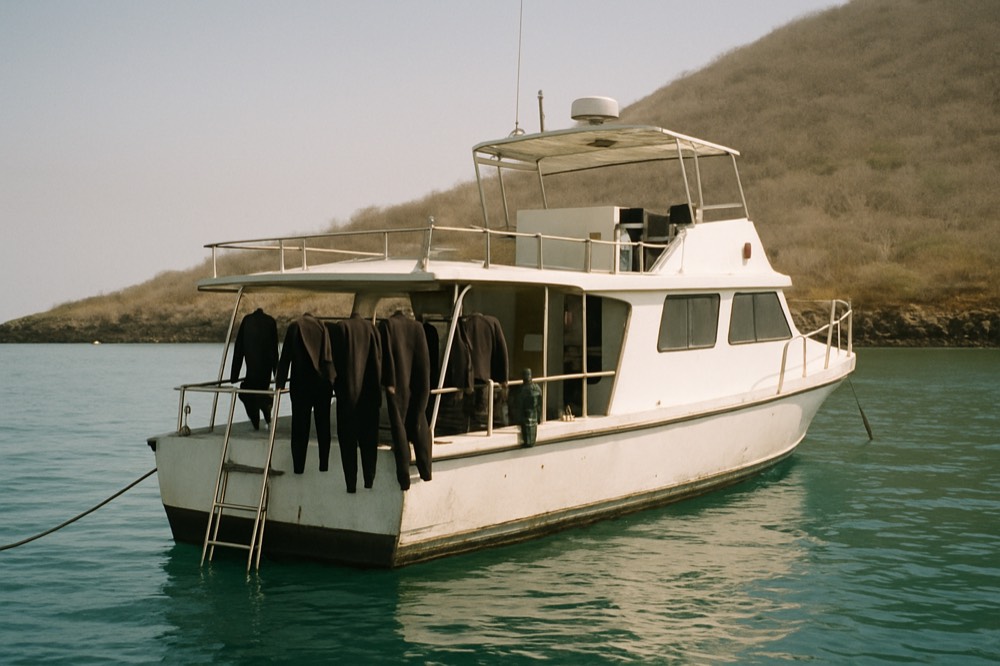
For a diver this matters more than almost any other booking decision. The famous northern islands of Darwin and Wolf, the ones with the schooling hammerheads and the whale shark sightings, appear on dive itineraries and effectively never on naturalist cruise itineraries. A diver who books a naturalist cruise because it was sold to them as a "liveaboard" can complete a wonderful week of wildlife watching without ever reaching the sites they bought the trip for.
The packages on this site reflect that split honestly. The diving category is dominated by hotel-based packages that pair lodging with guided dive days, while the cruise category carries naturalist vessels. This guide covers both sides of the line so you can see which one your trip actually needs.
Dive Liveaboard Or Naturalist Cruise: Why The Two Fleets Never Overlap?
The two fleets never overlap because Ecuador licenses them separately and approves their itineraries separately. A liveaboard dive permit allows 16 passengers and a dive-focused route; a naturalist cruise permit allows up to 64 passengers and a landing-focused route approved site by site. A boat cannot simply add Darwin and Wolf to a naturalist itinerary, because itineraries are fixed by park resolution.
The governing text is the Reglamento Especial de Turismo en Áreas Naturales Protegidas, RETANP, published in the Registro Oficial in January 2016. Its article 33 sets the passenger limits per modality, and the differences are stark:
| Tourism modality in the park and marine reserve | Passengers allowed |
|---|---|
| Navigable cruise tour (naturalist liveaboard) | 16 per permit, 64 per vessel |
| Navigable dive tour (dive liveaboard) | 16 per permit and per vessel |
| Day tour with landings | 16 per permit and per vessel |
| Day dive tour | 12 per permit and per vessel |
| Bay tour around a populated port | 16 per permit and per vessel |
Source: RETANP, Decreto Ejecutivo 827, article 33
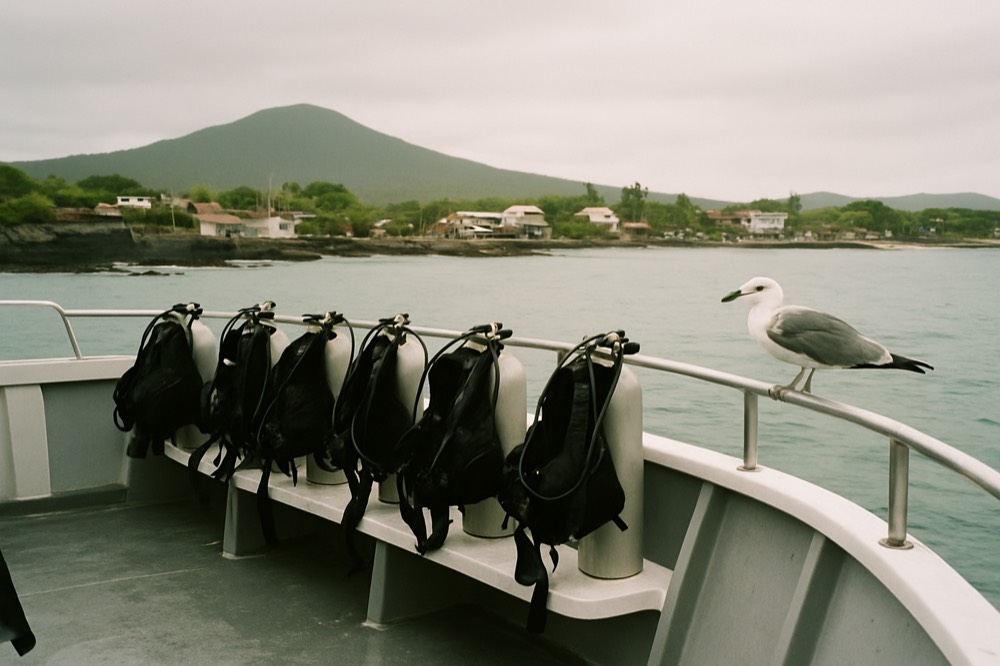
The second reason is itinerary control. The park directorate authorises each vessel's visitor sites and its day-by-day plan, and an approved itinerary cannot be modified, a real 2021 park resolution for a licensed vessel states this in those exact terms. So a naturalist boat that spends its week walking trails at Española or Genovesa cannot detour north to Darwin even if its passengers ask, and a dive boat cannot add the landings that make naturalist cruises famous. The trips are built for different purposes from the permit upward.
If your priority is underwater, the diving packages are the ones to compare first. If your priority is wildlife on land, the naturalist side wins, and the Galapagos cruise itineraries guide breaks down what each route actually visits.
What Does A Galapagos Liveaboard Or Diving Package Cost?
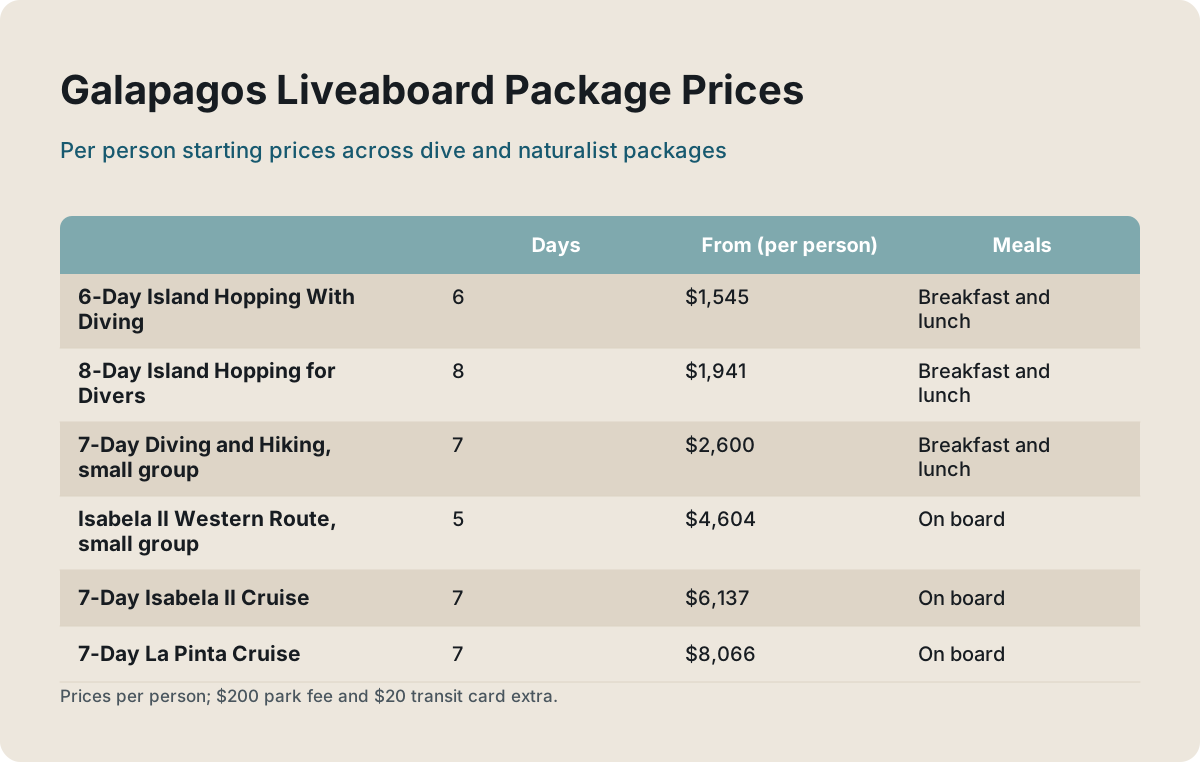
Diving packages on this site start at $1,545 per person for six days and climb to $2,600 for a seven-day small-group diving and hiking trip, while naturalist liveaboard cruises run from $4,604 to $8,066 per person. Every price is per person, and the $200 park fee and $20 transit card sit on top of most packages.
The price gap between the two categories is structural, not cosmetic. The diving packages here are hotel-based: you sleep ashore in towns like Puerto Ayora or Puerto Villamil and dive from day boats, which keeps costs down because the operator is not running a floating hotel. The cruise packages carry berths, chefs and crew for a full week at sea, and the price reflects that.
| Package | Days | From (per person) | Rating | Meals |
|---|---|---|---|---|
| 6-Day Island Hopping With Diving | 6 | $1,545 | 5 from 1 review | Breakfast and lunch |
| 8-Day Island Hopping for Divers | 8 | $1,941 | 5 from 1 review | Breakfast and lunch |
| 7-Day Diving and Hiking, small group | 7 | $2,600 | 5 from 3 reviews | Breakfast and lunch |
| Isabela II Western Route, small group | 5 | $4,604 | 5 from 24 reviews | On board |
| 7-Day Isabela II Cruise | 7 | $6,137 | 4.9 from 31 reviews | On board |
| 7-Day La Pinta Cruise | 7 | $8,066 | 5 from 48 reviews | On board |
Two honest notes on that table. First, several of these products have very small review pools, one or three reviews, so the ratings describe a handful of guests rather than a broad consensus. Second, review counts this thin are normal for Galapagos packages, the whole category sells in low volumes compared with mainstream destinations, and a small pool is not a red flag by itself. It does mean you should read the listing's own itinerary text carefully rather than lean on the score.
The extras catch people out. The park entrance fee is $200 for foreign adults, paid in cash in US dollars to rangers on arrival at Baltra or San Cristóbal airport, and there is no official online prepayment portal for it. The Transit Control Card is $20 per person, bought at the airport counter in Quito or Guayaquil, with free online pre-registration to speed things up. On 33 of the 50 packages in our roster the listing never states whether the park fee is included, which means "not stated", not "not included". Ask before you book. The flights, park fee and transit card guide walks through every one of these charges.
Darwin And Wolf: The Sites Only A Dive Trip Reaches
Darwin and Wolf are two remote northern islands whose surrounding waters are the Galapagos' signature diving ground, and they sit far beyond the range of any land-based day tour. A trip that does not include them, or the western islands where penguins and cormorants feed, is a good wildlife trip but not the diving trip many people picture when they book.
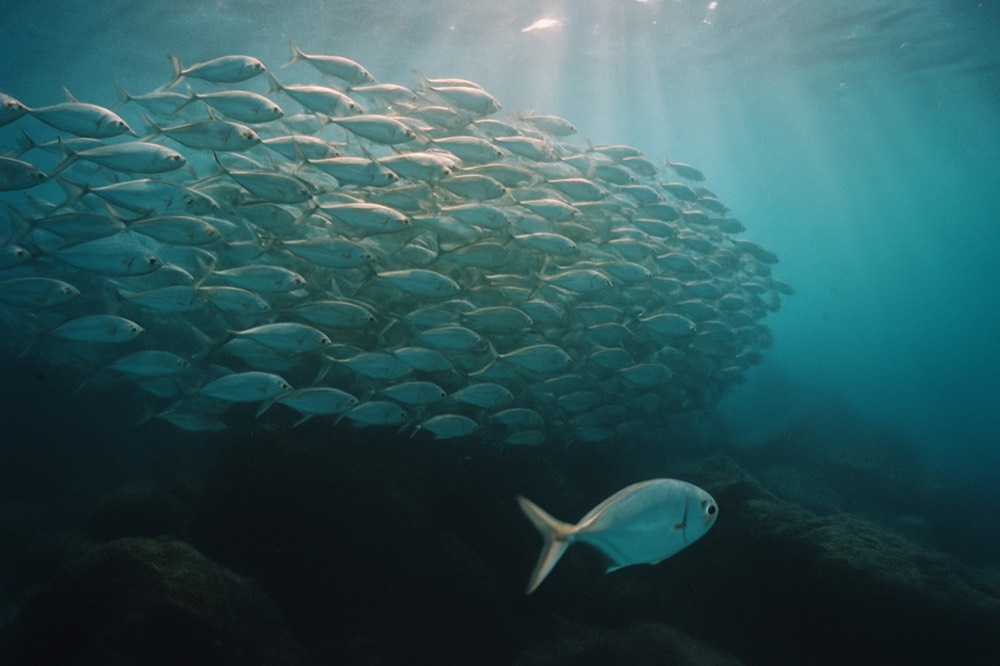
The northern islands are where the pelagic action concentrates: schooling hammerheads, Galapagos sharks and, for lucky visitors, whale sharks. No naturalist cruise itinerary in our roster includes them, and no hotel-based day tour can reach them, the distance is simply too great for a day boat. Reaching Darwin and Wolf realistically means a dedicated dive liveaboard booked through a specialist operator, typically a seven-night or longer trip.
What the packages on this site do instead is concentrate on the central and western dive sites that day boats can genuinely reach: Santa Cruz, Isabela, North Seymour and the areas around them. That is not a consolation prize. The western waters around Isabela and Fernandina are where the Galapagos penguin hunts, the only penguin that lives on the equator, and where flightless cormorants fish. Park monitoring counted 391 penguins and 656 cormorants in its 2025 surveys, and a dive or snorkel in those waters puts you in the same current they hunt in.
The 7-Day Diving and Hiking on the Galapagos Islands Tour makes the trade explicit: it is a small-group trip rated 5 from 3 reviews, from $2,600 per person, pairing dive days around Santa Cruz, Isabela and Bartolomé with hikes on the same islands, plus a choice of Santa Fe or North Seymour as an optional stop. Guests sleep ashore and dive by day. If your heart is set on Darwin and Wolf specifically, this style of package is the wrong product and you should be shopping with a dedicated dive liveaboard operator instead, which is exactly the mistake this guide exists to prevent.
How Many Days Do You Need On A Liveaboard-Style Package?
Five to eight days is the working range for almost every package in this category, and the honest answer is that shorter trips trade away either the western islands or dive repetition. A four-day trip gives you one or two water days; a six-to-eight-day trip gives you the central islands plus Isabela and the west, which is where the underwater wildlife thickens.
The pattern across the roster is consistent. Four-day packages cluster around Santa Cruz with a satellite island or two. Six-day trips add Isabela and its surrounding sites. Eight-day trips have enough slack to include the longer crossings and still rest, which matters because inter-island travel in the Galapagos eats half-days. The how many days is enough in Galapagos question gets a fuller treatment on the blog, but the diving version has its own logic: every dive day you add is another chance at the species that do not show up reliably, and the penguin does not appear on a schedule.
The 6-Day Galapagos Island Hopping With Diving package is the entry point in this category, from $1,545 per person, rated 5 from a single review so far, with breakfast and lunch included. Six days is enough to base in Santa Cruz and Isabela, dive North Seymour and the west, and still have a buffer day for the weather that occasionally scrubs a small-boat departure.
What The Rules Say About Permits, Guides And Fixed Itineraries?
Park rules shape every liveaboard trip more than most travellers expect: visits require a park-accredited naturalist guide, itineraries are approved in advance and cannot be modified, and six popular sites now require an advance QR reservation that only registered local agencies can make. Knowing these rules explains why Galapagos packages feel structured compared with elsewhere.
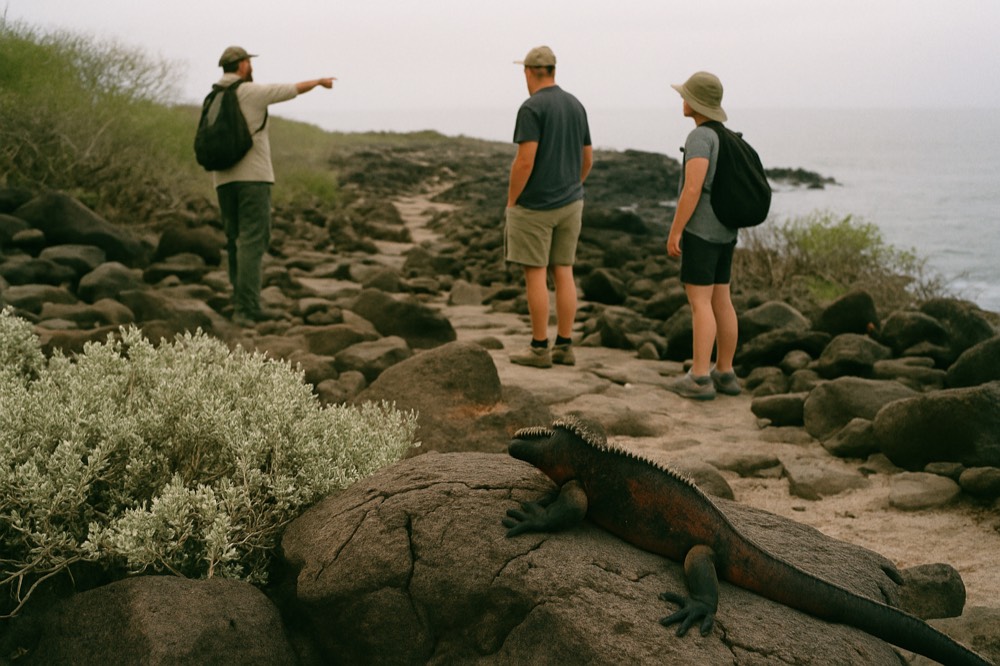
The current instrument is Resolución MAE-PNG/DIR-2026-0044-RM, signed on 12 August 2026 and published in the Registro Oficial. It requires that visits to the protected areas happen only with a DPNG-accredited naturalist guide, sets a two-metre minimum distance from wildlife while snorkelling, diving and walking, and four metres while kayaking or on panga rides. Sunscreens containing oxybenzone or octinoxate are restricted during water activities, which is why reef-safe is not just a marketing term here; the sunscreen rules for the Galapagos are worth reading before you pack.
The newest booking mechanic matters to package buyers directly. Since that resolution, the giant-tortoise breeding centres at Fausto Llerena, Arnaldo Tupiza and David Rodríguez, plus Las Grietas, Volcán Chico and Minas de Azufre, require an advance reservation through the park's system. Each reservation issues a single QR code tied to one group, one guide, one date and one time slot, and only agencies registered in Galapagos province can make them. A package operator who is not registered cannot get you into those sites, full stop.
The scale behind these rules is worth knowing. The park counts 176 authorised visitor sites, 91 marine and 85 terrestrial, each with its own permitted activities, listed on the official DPNG visitor sites page. In 2025 the archipelago received 290,404 visitors, up 4% on the year before, and 79% of them stayed on land rather than aboard a vessel. The full-year figures are published in the DPNG annual visitor report.
When Should You Book A Liveaboard-Style Trip?
January to May brings the warmest water, a monthly mean of about 25.7 degrees Celsius at Puerto Ayora in March, and calmer conditions; June to December is cooler, cloudier and windier, with water near 21.5 degrees in August and September. Divers chasing big pelagics often prefer the cooler, nutrient-rich season; travellers prone to seasickness prefer the warm one.
The two seasons are defined by the Charles Darwin Foundation's climatology work: the hot season, January to May, is when the southeasterly trades weaken, and the cool season, June to December, is when they strengthen. Stronger winds mean livelier seas, so the honest way to describe roughness is by season and wind, not by a wave figure, and no reliable public wave record for the archipelago exists to quote anyway.
| Month | Mean sea temperature, Puerto Ayora | Mean air temperature | Typical feel |
|---|---|---|---|
| January | 24.5 °C | 25.6 °C | Warm, calm, occasional rain |
| March | 25.7 °C | 26.9 °C | Warmest water of the year |
| May | 24.7 °C | 25.5 °C | Warm, seas settling |
| August | 21.5 °C | 21.9 °C | Coolest, windiest, garúa mist |
| September | 21.5 °C | 21.7 °C | Coolest water, annual arrival trough |
| December | 23.2 °C | 24.0 °C | Warming, seas easing |
Values are 1991 to 2020 monthly means computed from the Charles Darwin Foundation's Puerto Ayora station record, published through its Galapagos climatology database.
Demand follows a double peak: foreign visitors arrive heaviest from March to April, Ecuadorian visitors in August, and September is the annual trough. That trough is the quiet season, and it coincides with the coolest water, which for a diver is precisely when the marine life is most active around the western islands. Travellers on public forums consistently report that the inter-island ferries are rougher than the day boats and most cruise legs, and that starting motion-sickness medication the night before works better than dosing on the dock.
If you are weighing this against a full naturalist cruise, the Galapagos cruise vs land package comparison covers the trade-offs in more detail, and the Isabela II Natural Selection Journey represents the cruise end of the spectrum at 4.9 from 31 reviews, from $6,137 per person.
How Do You Book The Right Liveaboard Package Without Losing The Point Of The Trip?
Book by purpose, not by label: decide first whether the trip is for diving or for landings, then match the permit class to that purpose, then check the itinerary for the specific islands you care about. Ask the operator whether the park fee and flights are included, confirm the guide is park-accredited, and verify free-cancellation terms before paying.
The single most useful question to ask any operator is blunt: which islands does this itinerary actually visit, and are any of them conditional? Listings sometimes name sites that depend on weather or permits, and the park's fixed-itinerary rule means a swap is not something a crew can improvise at sea. Get the day-by-day plan in writing.
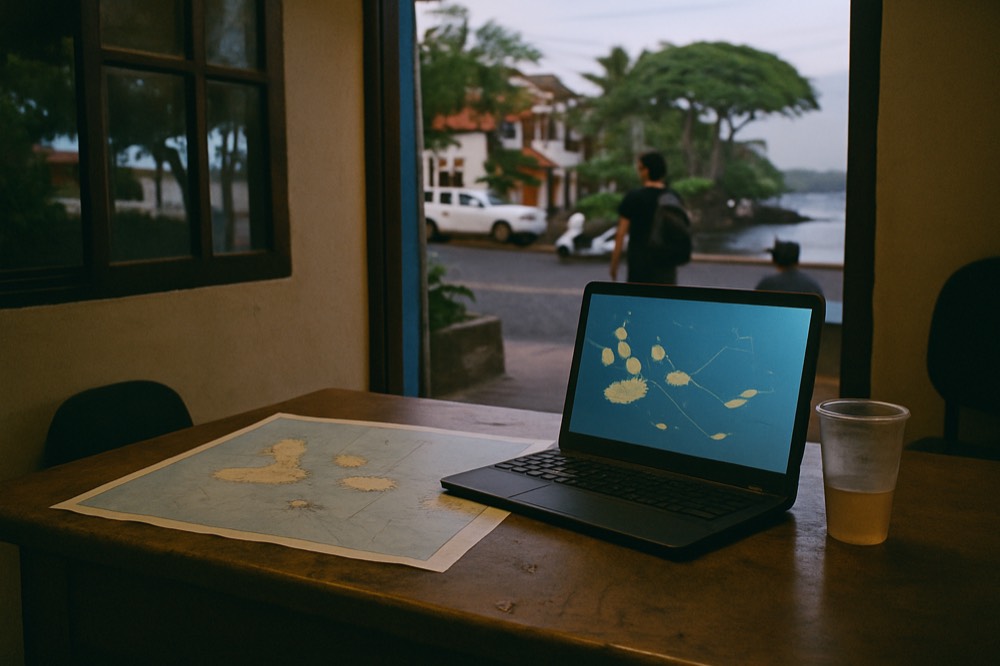
Second, check what the price actually covers. On our roster, breakfast and lunch are the most common inclusion on land-based packages, while the cruises are full board. Flights are stated as included on only a handful of packages and simply not mentioned on many others, and a null there means "not stated", never a promise. The how to book a Galapagos package guide has the full checklist.
Third, mind the cash. You need $200 per foreign adult in clean US dollar bills for the park fee on arrival, plus $20 per person for the transit card, and cards are not reliably accepted at either point. Travellers repeatedly report wishing someone had told them this before landing.
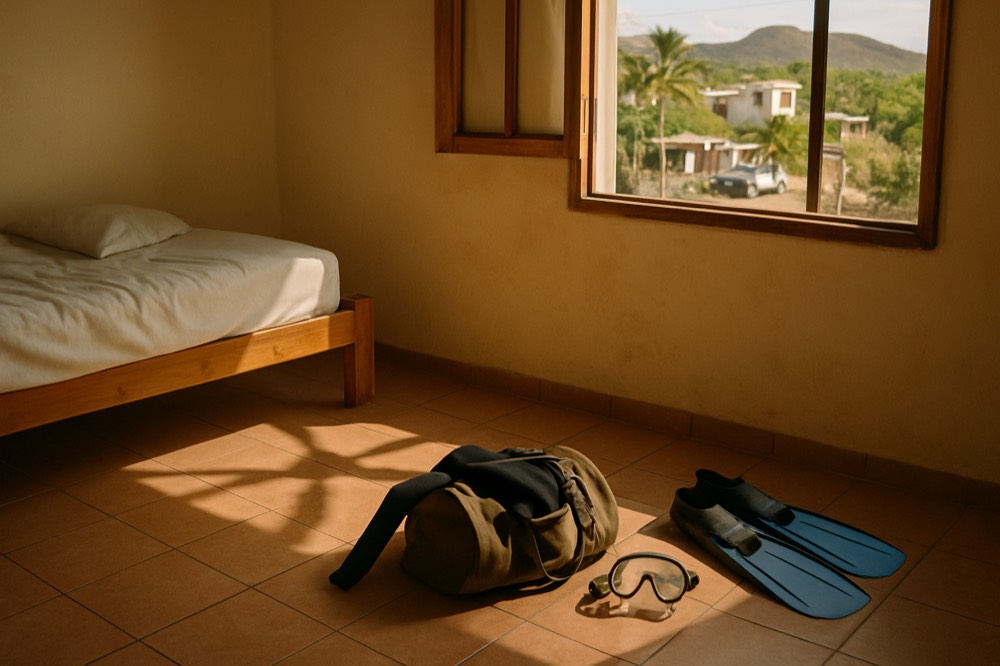
Finally, pack for the water you chose. A wetsuit is not optional in the cool season, and rentals on the islands vary in quality, so travellers on recent threads consistently recommend bringing your own mask and snorkel at minimum. The packing guide for a Galapagos cruise covers the rest, including the items biosecurity will confiscate.
The split between liveaboard styles is the site's core subject, and Galapagos Islands Tour Packages exists to keep it honest: every price, rating and itinerary claim on these pages comes from the operator's own live listing rather than from second-hand roundups.
Common Questions About Galapagos Liveaboard Packages
What Is A Galapagos Liveaboard Package?
A multi-day trip where you sleep aboard the vessel. In the Galapagos the term splits into two legal permit classes: dive liveaboards, capped at 16 passengers, and naturalist cruise vessels, capped at 64. Many packages sold as "liveaboard" are actually hotel-based trips with dive days, so check where you sleep before booking.
Can A Naturalist Cruise Take Me Diving At Darwin And Wolf?
No. Darwin and Wolf sit far to the north and appear on dedicated dive liveaboard itineraries, not on naturalist cruise routes. Itineraries in the Galapagos are approved in advance by the park and cannot be modified, so a naturalist boat cannot detour there even on request.
How Much Does A Galapagos Diving Package Cost?
On this site, diving packages run from $1,545 per person for six days to $2,600 for a seven-day small-group diving and hiking trip. Naturalist liveaboard cruises run higher, from $4,604 to $8,066. All prices are per person, and the $200 park fee and $20 transit card are extra on most packages.
Do I Need A Guide On A Liveaboard Or Diving Package?
Yes. Park rules in force since August 2026 require that visits to protected areas happen only with a park-accredited naturalist guide. Six popular sites, including the tortoise breeding centres and Las Grietas, additionally require an advance QR reservation that only agencies registered in Galapagos province can make.
When Is The Best Time For A Galapagos Liveaboard Trip?
January to May has the warmest water, about 25.7 degrees Celsius at Puerto Ayora in March, and calmer seas. June to December is cooler and windier, with water near 21.5 degrees in August and September, but the nutrient-rich season suits divers chasing pelagic species. September is also the quietest month for crowds.
Can I Do A Galapagos Liveaboard On A Budget?
The hotel-based diving packages are the budget route, from $1,545 per person, because you pay for dives and lodging rather than a floating hotel. True dive liveaboards reaching Darwin and Wolf cost considerably more and are booked through specialist dive operators. The budget packages guide covers the cheaper end of the market in detail.