Do I Need Hiking Shoes For Galapagos?
The honest answer to footwear for a Galapagos package: lava rock, wet landings and park trail rules mean two pairs, and neither is a hiking boot.
 By Oleg Galeev, Editor
Do I Need Hiking Shoes For Galapagos?
No, and in most cases hiking boots are actively the wrong choice. Galapagos walking happens on sharp lava, loose volcanic ash and sand, often straight out of the water, so a broken-in trail shoe or sturdy sneaker handles the dry landings better, and a proper wet shoe handles the rest. The one thing almost nobody regrets is the second pair.
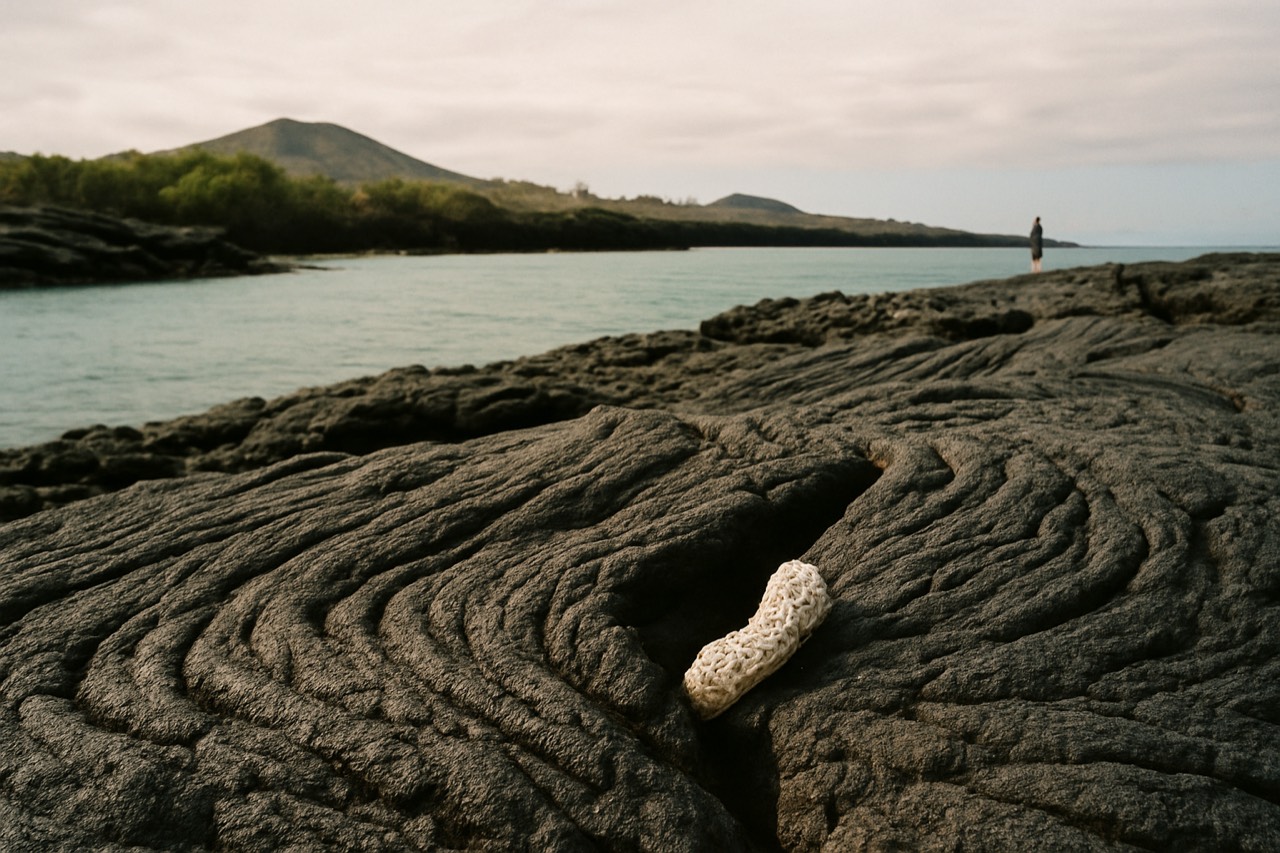
The question sounds like a gear-list detail, but it is really a terrain question, and Galapagos terrain does not behave like a mountain trail anywhere else. The islands are geologically young, which means the rock underfoot has not had time to break down into soil. Walks happen on basaltic lava flows, cinder slopes and ash, sometimes all three in a single excursion. The park maintains marked trails across its 85 terrestrial visitor sites, and the walking distance on any one of them is modest, usually one to three kilometres. What makes it demanding is not distance or gradient. It is the surface: sharp, uneven, occasionally loose, and hot in the sun.
Then there is the water. A large share of visitor sites are reached by panga, the small zodiac boats that shuttle you from a cruise vessel or day boat to shore, and many of those landings are wet, meaning you step out of the boat into ankle-deep or knee-deep surf and wade up the beach. A leather hiking boot filled with seawater is a heavy, blistering liability for the rest of the day. That single fact is why experienced Galapagos travellers almost always end up in two pairs of shoes rather than one heroic all-rounder.
This matters doubly for package buyers, because most multi-day itineraries mix both worlds in a single day: a morning wet landing and snorkel, an afternoon walk over lava. If you are weighing what a package actually includes and what you carry yourself, the what to pack for a Galapagos cruise guide breaks the whole kit down, footwear included. The short version for shoes is below.
What Is The Ground Actually Like On The Walking Excursions?
Mostly bare volcanic rock: smooth ropy pahoehoe in places, jagged a'a clinker in others, plus cinder paths, sand and compacted dirt around the inhabited towns. Trails are marked and short, typically one to three kilometres, but the surface is unforgiving on thin soles and can shred cheap sandals in a week.
The archipelago's geology is the whole story here. The islands sit on a hotspot about 1,000 kilometres off the South American continent, and the younger western islands, Isabela and Fernandina especially, carry lava flows that are geologically recent. Walking on fresh basalt is nothing like walking on the weathered granite or leaf-litter paths of a temperate national park. Pahoehoe lava cools in smooth, ropy folds that are pleasant underfoot but full of hollows and ridges that roll an ankle if you are not watching. A'a lava is the other kind, a field of loose, razor-sharp clinker that punishes anything flimsier than a real sole.
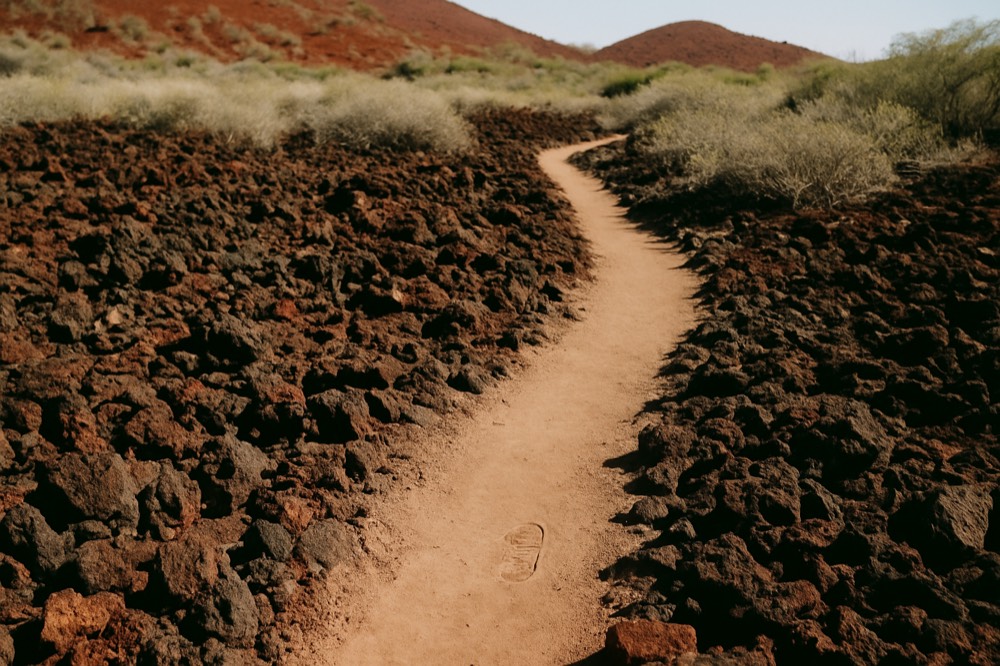
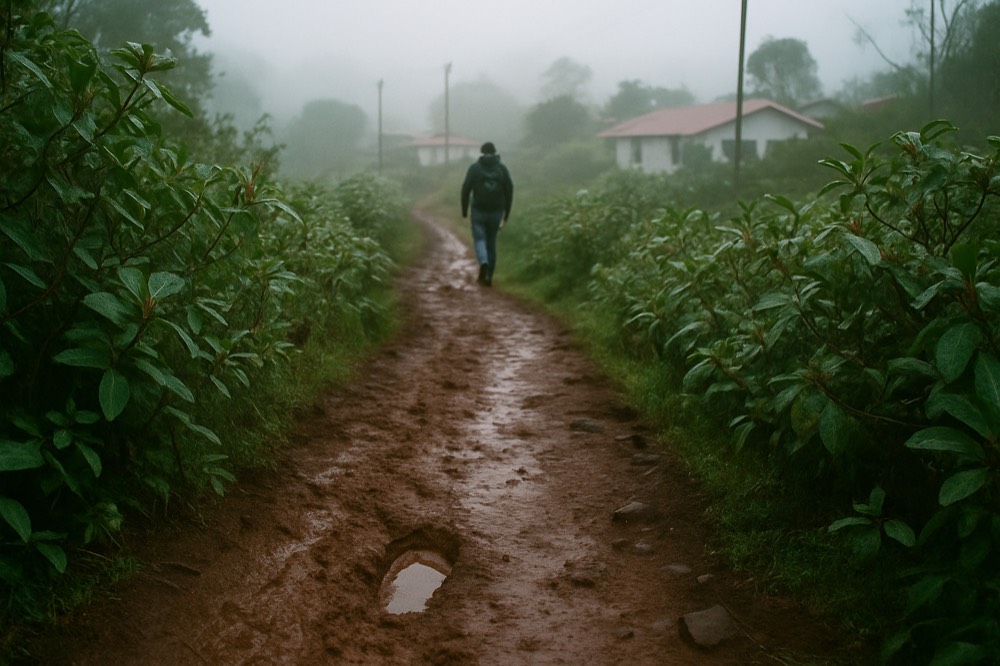
Around the inhabited towns, Puerto Ayora on Santa Cruz, Puerto Baquerizo Moreno on San Cristobal, Puerto Villamil on Isabela, the ground is mostly paved, packed dirt or sand, and any shoe works. The excursions are where the surface bites. Highland visits on Santa Cruz, where most packages call at a giant tortoise reserve in the mist zone, are on softer, muddier ground, and that is the one place a boot's grip and ankle support earn their keep, especially in the wetter hot season.
One more thing that shapes every walk: park rules require visitors to stay on the marked trails, beaches and delimited areas at all times, and if an animal blocks the trail you keep the minimum distance and only step around where the walk cannot continue. You can read the full current rules in the Galapagos visit rules resolution, published by the national park directorate. The practical consequence for shoes is that you never scramble cross-country, so the scrambling-proof boot is solving a problem that park rules already solved.
| Surface you will actually walk on | Where it appears | What it does to footwear |
|---|---|---|
| A'a lava (sharp loose clinker) | Western islands, Fernandina and Isabela sites | Cuts thin soles and sandals, rolls ankles |
| Pahoehoe lava (smooth ropy rock) | Bartolome, Sullivan Bay, many coastal walks | Uneven ridges and hollows, slippery when wet |
| Cinder and volcanic ash slopes | Bartolome summit path, some highland trails | Loose underfoot, fills shoe mesh with grit |
| Sand beaches | Wet landing sites everywhere | Trivial, but scorching midday |
| Paved town streets | Puerto Ayora, Puerto Baquerizo, Villamil | Anything works |
Why Wet Landings Change The Whole Footwear Calculation?
A wet landing means stepping from a moving panga into shallow surf and wading ashore, and many visitor sites are only reached that way. Afterward you walk the same lava trail in whatever you waded in, so the shoe needs to drain, grip wet rock and survive repeated saltwater, three things no leather hiking boot does well.
This is the part of the answer that people who have only hiked on continents tend to miss. On a cruise or island-hopping package, the panga ride is the commute. At a wet landing the boat noses onto the beach or holds position in shallow water, and you go over the side into the sea, usually to mid-calf, occasionally to the knee if the surf is up. At a dry landing you step onto rock or a small jetty and stay dry, but plenty of the most famous walks, the ones at the ends of the best excursions, begin with a wade.
The cool season, June to December, is when the southeasterly trade winds strengthen, and that is when landings and boat rides feel livelier. The Charles Darwin Foundation's climatology database defines the two seasons exactly that way, by wind strength. Nobody can honestly quote you a wave height for Galapagos waters, because the archipelago's own wave-monitoring buoy is out of service and the nearby NOAA buoys are tsunami instruments, so treat any blog that promises "swells of X metres" with suspicion. What is safe to say is that the second half of the year brings more wind, livelier surface chop and a better case for a shoe that stays on your foot.
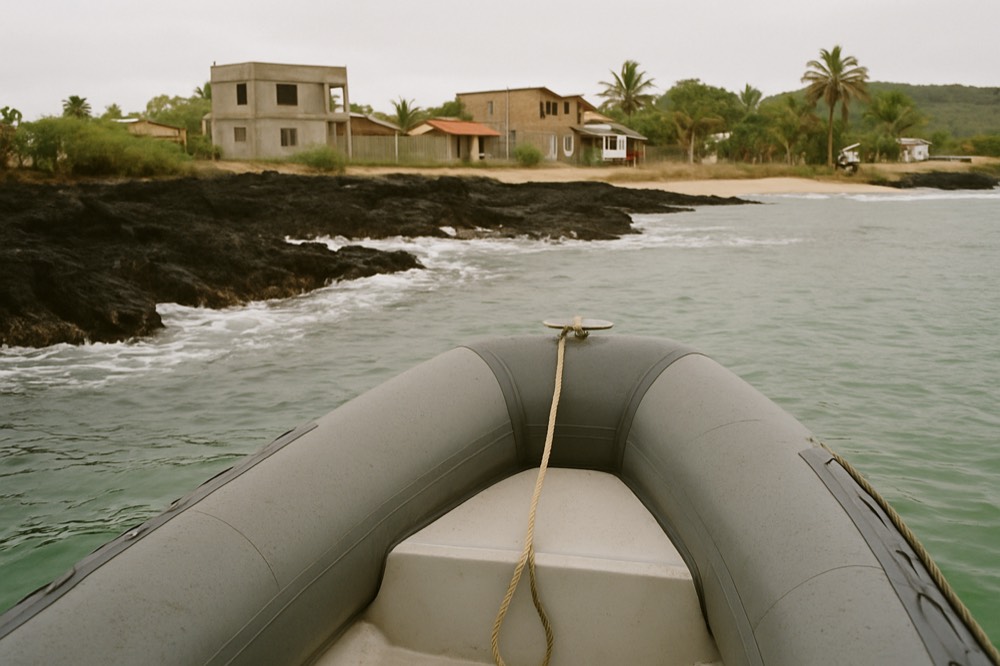
What works at a wet landing is a shoe that drains and dries: a closed-toe water shoe or a lightweight trail runner with fast-drying mesh. What fails is anything leather, anything with a gusseted waterproof membrane that traps the seawater it took on, and anything flip-flop. The classic Galapagos foot injury is not a twisted ankle on the trail. It is a slice on a'a rock from a sandal, or a blister farm from a boot that has been sloshing since the first landing of the day.
So What Should You Actually Pack? Two Pairs, Minimum
Pack one broken-in, grippy walking shoe for dry landings and town days, and one closed-toe wet shoe for wet landings and snorkel entries. Add socks you can rotate, and a cheap pair of flip-flops for the boat deck if you like, but the two shoe system is what keeps a week of mixed excursions painless.
The first pair is the dry walker. A trail runner or a light hiker with a real lugged outsole is ideal: it grips pahoehoe when it is wet, protects the sides of your feet from cinder, and flexes enough to be comfortable all day. It does not need to be waterproof. In Galapagos, waterproof is a liability, because everything gets wet eventually and waterproof shoes dry slowly. Break them in before you fly, because buying new shoes in Puerto Ayora is possible but expensive and the selection is thin. The full index of guides sits on Galapagos Islands Tour Packages.
The second pair is the wet shoe. A closed-toe water shoe with a hard sole is the standard recommendation, and the closed-toe part is not optional, because the same sharp rock that punishes sandals on the trail is waiting under the surf at the landing. Some travellers use an old pair of mesh trail runners for this job and retire them afterwards, which works fine and costs nothing. What you want is drainage, a sole thick enough that you cannot feel the lava through it, and a fit snug enough that a wave does not take one.
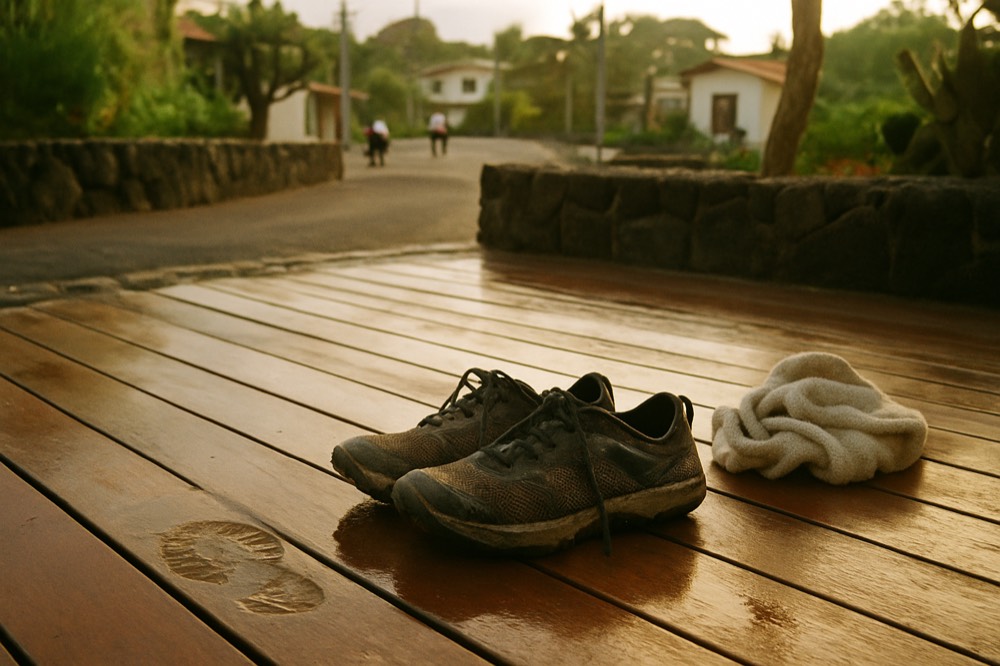
Socks deserve one honest sentence: you will wear them mostly on highland days and town days, and the mesh shoes go barefoot or with thin liners. Bring more pairs than seems reasonable, because nothing dries fast in the humid hot season and laundry on a small boat is limited. If you are still building the full list, the what not to bring to Galapagos rundown covers the other end of the packing question, the things that waste suitcase space.
| Footwear type | Verdict for Galapagos | Where it works, where it fails |
|---|---|---|
| Leather hiking boots | Wrong choice | Grip is fine but they soak at wet landings, dry slowly, blister |
| Lightweight trail runner | Best dry-landing shoe | Grips wet lava, dries overnight, packs small |
| Closed-toe water shoe | Best wet-landing shoe | Handles surf and sharp rock, poor for long hot walks |
| Sandals or flip-flops | Deck and town only | A'a lava cuts bare feet, and they blow out fast |
| Waterproof hikers | Skip them | The membrane traps seawater instead of repelling it |
Do Any Excursions Genuinely Need A Boot?
A few: the misty highland tortoise reserves on Santa Cruz and San Cristobal, some longer volcano walks on Isabela, and any package with real hiking in its name. If your itinerary is mostly coastal landings, no. If it lists a Sierra Negra rim trek or a full-day highland hike, bring one pair of light boots or accept muddy trail runners.
This is where the answer stops being universal and starts depending on which package you booked. A standard cruise itinerary, with its short marked walks at coastal visitor sites, never needs a boot. But the land-based and multisport packages, the ones built around hiking, kayaking and biking, do put real kilometres on real slopes. Isabela's highlands in particular can be wet, muddy and slippery, and the loose ash on the volcano slopes behaves like scree.
The package that most changes the footwear answer on this site's roster is the 8-Day Galapagos Adventure in San Cristobal, Santa Cruz and Isabela, a multisport itinerary rated 4.9 across 12 reviews, from $2,363, with all meals included and hotel pickup. Its sibling format, the 8-Day Island Hopping Adventure Expedition, rated 5 across 17 reviews and from $2,400, is another small-group option where the walking is a feature rather than a filler. For those, pack the boot or a very sturdy trail shoe. For a cruise-heavy week like La Pinta's Darwin's Legacy route, 5 across 48 reviews from $8,066, the two-shoe system carries you everywhere the panga goes.
If you are still deciding between formats, the cruise versus land package comparison explains how the walking differs: cruises concentrate on short coastal walks at remote sites, land-based packages lean on longer inland hikes reached from your hotel.
Does The Season Change The Footwear Answer?
Yes, a little. The hot season, January to May, brings warmer water and afternoon rain, so drainage and quick drying matter more. The cool season, June to December, means livelier seas and more overcast, muddier highland walks. Neither season makes a hiking boot the right call; both make the second pair more valuable.
The two Galapagos seasons are defined by wind, and the wind is what stirs the sea. From June to December the southeasterly trades strengthen, the garúa mist sits on the highlands, and the inter-island boat rides and landings feel more spirited. From January to May the winds weaken, the water warms toward its March peak, and the odd heavy afternoon downpour turns the highland trails to mud. Sea temperature at Puerto Ayora averages 25.7 degrees Celsius in March against 21.5 in August and September on the 1991 to 2020 record, so the water itself is swimmable year-round and the wet shoe earns its place in every month.
Practically, the seasonal adjustment is small. In the hot season, prioritise shoes that dry overnight, because afternoon rain will find you. In the cool season, prioritise grip, because the lava and the highland mud are both damp more often. A traveller on a budget can read the cheap Galapagos planning guide for the wider cost picture, but footwear is one corner where cutting costs backfires: a sliced foot on day two can cost you the excursions you flew all that way for.
What Else Protects Your Feet Out There?
Beyond shoes: reef-safe sunscreen without oxybenzone or octinoxate, which park rules restrict during water activities, a minimum two-metre distance from wildlife on land and in the water, and staying on marked trails. Feet also need socks that dry and a blister kit, because salt, sand and wet shoes do more damage than any rock does.
The footwear question sits inside a small set of park rules that shape what you can comfortably do. The current visit rules, Resolución MAE-PNG/DIR-2026-0044-RM, set a two-metre minimum distance from wildlife when walking, snorkelling or diving, camera gear included, and four metres when kayaking or riding a panga along the shore. Sunscreens containing oxybenzone or octinoxate are restricted during water activities in the protected areas, so check the label on whatever you put on your feet and ankles before a snorkel. The official biosecurity rules matter too, since soil and seeds hitchhiking in dirty boot treads are exactly what the arrival inspection is looking for. Clean your shoes before you pack them.
The blister kit is the unglamorous item that saves trips. Pack tape or moleskin, a small antiseptic and a couple of dressings, because the combination of wet shoes, sand and salt produces hotspots faster than any mountain trail. A pair of thin neoprene socks can make a marginal wet shoe comfortable for a full week. And if you snorkel a lot, consider bringing your own fins, comfort is personal, but at minimum bring your own mask if you have a face it fits, because rental gear varies.
One last planning note for anyone assembling the whole trip: the park entrance fee is $200 per foreign adult, paid in cash US dollars to rangers on arrival at Baltra or San Cristobal, and the transit control card is $20 per person, bought at the counter in Quito or Guayaquil airport after free online pre-registration. Keep a little cash aside for that, because a card that does not work at the ranger desk is a worse trip-ruiner than any shoe. The full breakdown lives in the flights, park fee and transit card guide.
Common Questions About Footwear In Galapagos
Do I Need Hiking Shoes For Galapagos?
Usually no. The terrain is sharp lava and loose ash rather than trail, and many landings are wet, so a broken-in trail runner for dry walks plus a closed-toe water shoe for wet landings beats a hiking boot in almost every itinerary. The exceptions are hiking-focused packages with volcano rim treks and muddy highland walks, where one light boot or a sturdy trail shoe earns its place.
Can I Just Wear Trainers The Whole Trip?
You can, and many people do, but the trainers need a real sole and a closed toe. Thin-soled fashion trainers will feel every ridge of lava and will not survive a week of wet landings. A proper running or trail shoe with lugs handles most of what the islands throw at it, and an old pair you do not mind ruining makes a fine dedicated wet-landing shoe.
Are Sandals Ever Acceptable On Excursions?
Only in town and on the boat deck. The a'a lava fields cut bare skin, and sandals blow out quickly on rough rock. If you want something to slip on after a snorkel, a cheap pair of flip-flops for the vessel is fine, but never make them your landing shoe.
Do I Need Waterproof Boots?
No, and they can make things worse. Waterproof membranes are designed to keep water out, which also means they keep seawater in once you wade a wet landing. A fast-drying mesh shoe that drains and dries overnight is the better tool for this environment.
Does The Season Affect Which Shoes I Bring?
Slightly. The hot season from January to May brings afternoon rain, so quick-drying shoes matter more. The cool season from June to December brings stronger winds and livelier seas, plus damp highland mud, so grip matters more. The two-pair system works in both seasons.
Should I Buy Shoes In Galapagos If Mine Fail?
Only as a last resort. Puerto Ayora has a few shops with basic sneakers and sandals, but the selection is limited and prices are high for what you get. Bring the two pairs from home, already broken in, and you remove the problem entirely.