Best Galapagos Cruise Ships Compared
Ranking Galapagos cruise ships means ranking three things: how the hull handles open water, how many guests share one naturalist, and whether the cabin lets you see out. Here is what the verified rules and the actual review pools say.
Short answer
The strongest Galapagos cruise ships on this roster are the La Pinta at 5.0 from 48 reviews (from $8,066), the Isabela II at 5.0 from 24 reviews (from $4,604), and the Seaman Journey at $4,500 with no reviews yet. Legally, every cruise permit carries at most 16 passengers and a vessel at most 64.
The question "which Galapagos cruise ship is best" gets answered badly all over the internet, usually with a list of ten hulls, a photo of each, and no mention of the two facts that actually decide your trip: the legal permit structure that caps how many people are on your boat, and the review pool behind each rating. A 5.0 from 48 reviews and a 5.0 from 3 reviews are not the same claim. This guide ranks the ships bookable through Galapagos Islands Tour Packages on the three things passengers report mattering by day three: how the boat rides the open water, how many guests share one naturalist guide, and whether the cabin has a window that opens.
What Actually Makes A Galapagos Cruise Ship The Best?
The best Galapagos cruise ship is not the newest or the biggest, it is the one whose legal permit structure, itinerary and cabin layout match your tolerance for motion, your wildlife priorities and your budget. Every cruise permit in the national park carries a maximum of 16 passengers, and no cruise vessel may carry more than 64, so even the "big" ships are small by Caribbean standards.
That permit structure comes from Ecuador's special tourism regulation for protected areas, RETANP, which sets the passenger limits per tourism modality in article 33. A cruise vessel's capacity is therefore not a marketing choice, it is a stack of permits: a 64-berth ship is running four 16-passenger permits. The full table is worth reading once, because it explains why a Galapagos cruise never feels like a mega-ship.
| Tourism modality in the park and marine reserve | Maximum passengers |
|---|---|
| Navigable multi-day cruise | 16 per permit, 64 per vessel |
| Liveaboard dive cruise | 16 per permit and per vessel |
| Day tour with landings | 16 per permit and per vessel |
| Day dive tour | 12 per permit and per vessel |
| Bay tour around a populated port | 16 per permit and per vessel |
The source is the special tourism regulation for protected areas, Decreto Ejecutivo 827, in force since 2016. Two related rules shape a buying decision. Only vessels under 20 passengers may change their itinerary at all, larger ships only in proven force majeure, and the park's 2014 management plan contemplates vessels up to 100 passengers as a ceiling, not a routine size. On a big ship, the itinerary genuinely cannot move, so the route you book is the route you sail.
Itineraries themselves are fixed by the park. An approved itinerary resolution states plainly that the schedule and its activities may not be modified under any concept without express park authorization, and foreign yacht itineraries run at most 15 days. So when a listing shows a day-by-day route, that route is a legal document, not a suggestion the captain can improve on.
How Do You Compare Galapagos Cruise Ships On Size And Ride?
Compare ships on passenger count, hull type and route, because those three determine how the boat behaves in open water. The cool season, June to December, is when the southeasterly trade winds strengthen, so the same hull rides very differently in August than in March. Catamarans are generally the steadier platform, and small ships roll more than their photos suggest.
The Charles Darwin Foundation defines the two Galapagos seasons by wind, not by waves: the hot season, January to May, is when the trades weaken, and the cool season, June to December, is when they strengthen. That is the honest, sourced way to talk about roughness, because no reliable wave-height record exists for these waters. The archipelago's own wave buoy at Puerto Ayora is out of service, and the two NOAA buoys in Galapagos waters are tsunami buoys that measure water column height, not surf. Travellers on public forums consistently report the same pattern anyway: the inter-island ferries, especially Santa Cruz to Isabela, draw rougher ride reports than cruise legs, and western routes toward Fernandina and Isabela draw more swell complaints than eastern and central ones.
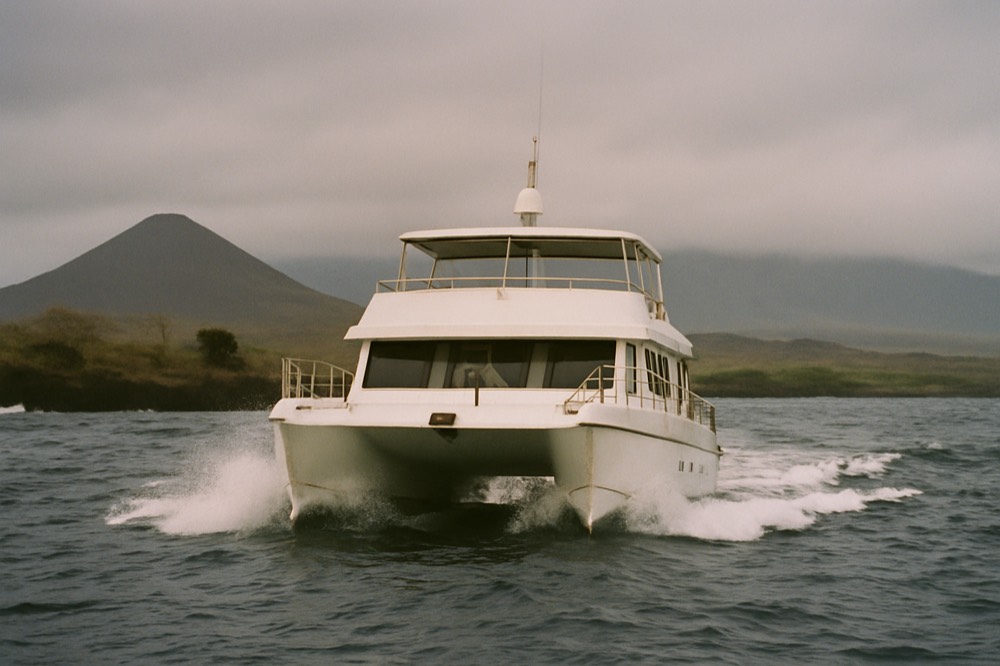
What that means for ship choice is simple. If your dates fall in the cool season and your route heads west, the platform matters more than the thread count. If you are sailing a central or eastern loop in the hot season, almost anything floats comfortably. Deck level matters too, in the other direction from what brochures imply: lower-deck cabins near the engine draw repeated complaints in guest reviews about noise and fuel smell, while upper-deck and midship cabins are what experienced cruisers ask for.
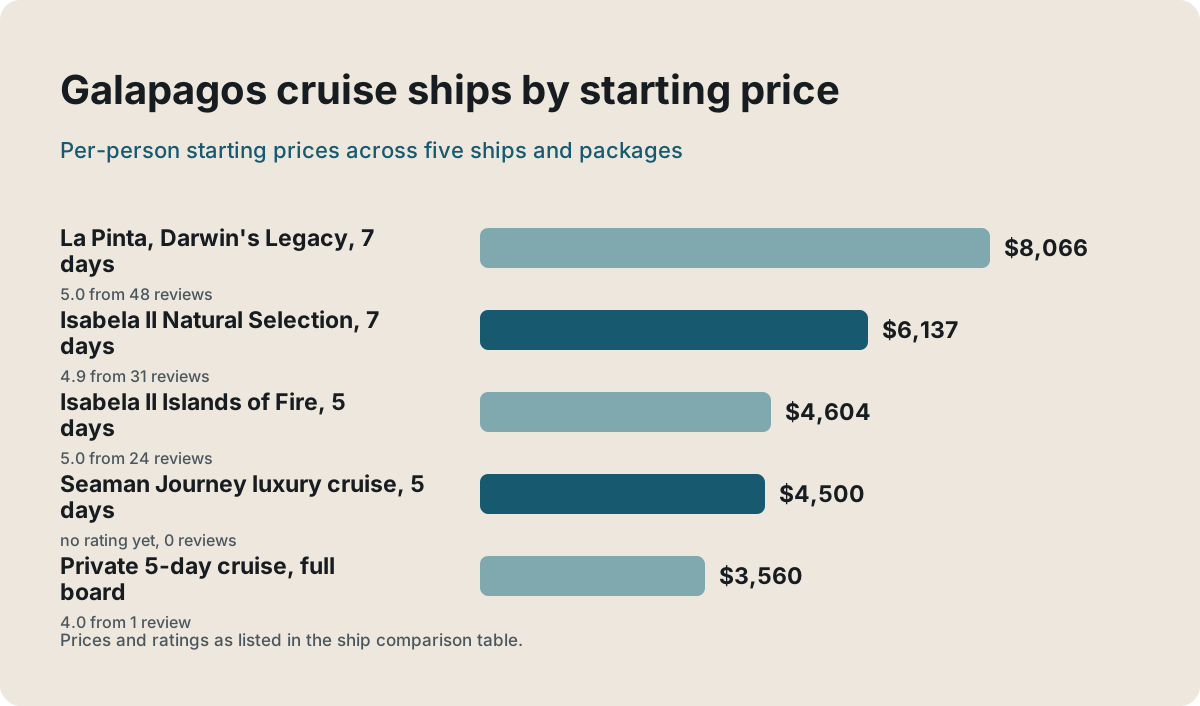
Here is how the bookable ships on this roster stack up on the numbers that are verified from their own listings.
| Ship / package | Guests | From (per person) | Rating | Reviews |
|---|---|---|---|---|
| La Pinta, Darwin's Legacy, 7 days | standard | $8,066 | 5.0 | 48 |
| Isabela II Natural Selection, 7 days | small group | $6,137 | 4.9 | 31 |
| Isabela II Islands of Fire, 5 days | small group | $4,604 | 5.0 | 24 |
| Seaman Journey luxury cruise, 5 days | standard | $4,500 | no rating yet | 0 |
| Private 5-day cruise, full board | private | $3,560 | 4.0 | 1 |
Read the review counts as carefully as the ratings. La Pinta's 5.0 from 48 reviews is the strongest evidence on the roster. The private cruise's 4.0 from a single review is one person's experience, not a consensus, and the Seaman Journey has no reviews yet at all, which is honest information rather than a red flag.
Which Galapagos Cruise Ships Have The Best Cabins?
The best cabins on this roster are on La Pinta and the Isabela II ships, both operating small-group or standard configurations with confirmed multi-island routes, and on the Seaman Journey, whose full-board 5-day itinerary includes breakfast, lunch and dinner from $4,500. What matters more than the brochure is deck position: ask for upper-deck or midship, and away from the engine.
Cabin complaints are the most repeated regret in guest reports on small Galapagos ships. One detailed review of a lower-deck cabin describes noise from the engine and a fuel smell strong enough to drive the guests out onto the deck, with the smell following their clothes home. That is not a reason to avoid small ships, it is a reason to specify your cabin. The practical checklist travellers who have done this before tend to give: ask which deck the cabin is on, ask whether the window opens, ask how far it sits from the engine room, and start motion-sickness medication the night before the first navigation rather than the morning of.
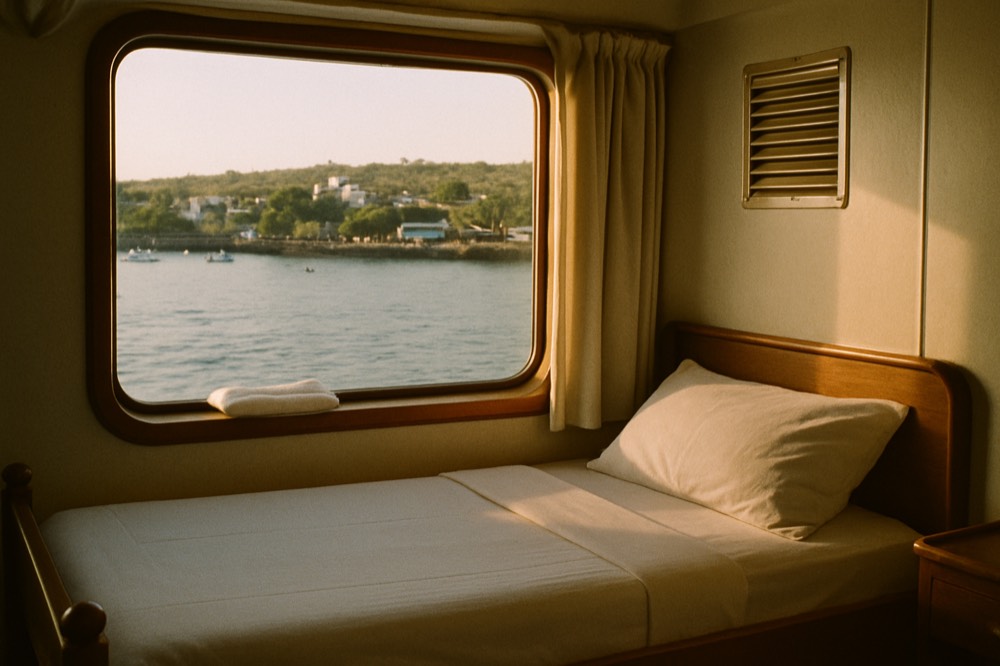
The Seaman Journey is the full-board option on the roster: breakfast, lunch and dinner are included, hotel pickup is covered, and the 5-day route takes in San Cristobal, Bartolome, Santa Cruz, Isabela, Santa Fe, North Seymour, South Plaza and Genovesa before ending at Baltra. That is an unusually broad island list for a 5-day sailing, and Genovesa in particular is a site many shorter itineraries skip entirely. It has no reviews yet, so there is no guest evidence to lean on, only the listing's own detail.
The Isabela II ships split their appeal by length. The Islands of Fire route runs 5 days from $4,604 with a 5.0 from 24 reviews and confirms Bartolome, Santa Cruz, Isabela, Fernandina, Santiago and Baltra, which puts it on the western circuit where the wildlife density is highest. The Natural Selection Journey runs 7 days from $6,137 at 4.9 from 31 reviews and adds San Cristobal, North Seymour, Floreana and Espanola, the latter being the waved albatross island. Deciding between them is mostly deciding whether Espanola is worth two extra days.
How Many Guests Share One Naturalist Guide?
There is no verified guide-to-guest ratio for Galapagos, despite what most websites claim. What is verified: a guide is compulsory at protected sites, each cruise permit carries at most 16 passengers, and a ship's total capacity is a stack of those permits. Small-group ships therefore put fewer guests around each naturalist, which is the honest way to compare.
The widely repeated "one naturalist guide per 16 guests" rule is not a Galapagos rule at all. The 1:16 ratio does exist in the tourism regulation, but it is written for continental Ecuadorian protected areas and explicitly not for the islands. Printing it as a Galapagos fact is one of the most common errors on the Galapagos travel web. What the documents actually support: visits to the protected areas may only happen in the company of a park-accredited naturalist guide, per the visit rules in force since August 2026, and each 16-passenger permit represents the guide-grouping unit the park works with.

For a buyer, the comparison that matters is total guests per ship. The small-group ships on this roster, both Isabela II routes, spread their passengers across fewer berths than a 64-passenger vessel running four permits, so the ratio of voices to one naturalist on a landing is naturally lower. On a full 64-guest ship you will share every briefing and every trail with a larger crowd, even though each permit group is legally capped at 16. If the guide relationship is why you are cruising rather than staying on land, small-group configurations are worth their premium, and the guide to cruise versus land packages works through that trade-off in detail.
The same visit rules that make guides compulsory also set the wildlife distances that shape every landing: two metres minimum from animals while walking or snorkelling, camera gear included, four metres from shore and animals while kayaking or riding a panga, and 100 metres from whales and 50 from dolphins. A good guide is the person who manages those distances all day without turning the trip into a lecture.
Which Ships Reach The Remote Western Islands?
The ships that confirm Fernandina on their routes are the Isabela II Islands of Fire 5-day sailing from $4,604 and the La Pinta 7-day cruise from $8,066, plus the Natural Selection Journey at 7 days from $6,137. Fernandina and the western Isabela coast are the wildest stretch of the archipelago and cannot be reached on a day tour from a hotel.
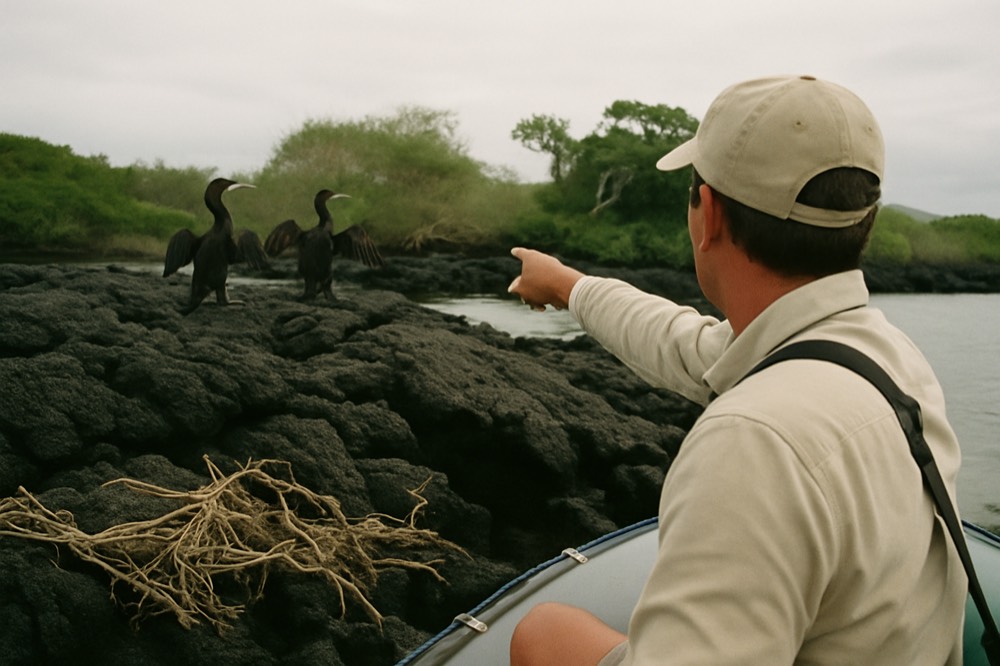
This is the single biggest structural difference between ships, bigger than cabins or menus. The western islands sit beyond the range of any land-based day trip, so if Fernandina's marine iguana colonies and the flightless cormorant are priorities, a ship is the only way in. The 2024 park and Darwin Foundation census counted 413 Galapagos penguins and 762 flightless cormorants across Isabela, Fernandina and the Las Marielas islets, and the 2025 counts came in at 391 penguins and 656 cormorants. Those are the two species that make the western detour worth it, and both are most reliably seen from a vessel on that coast.
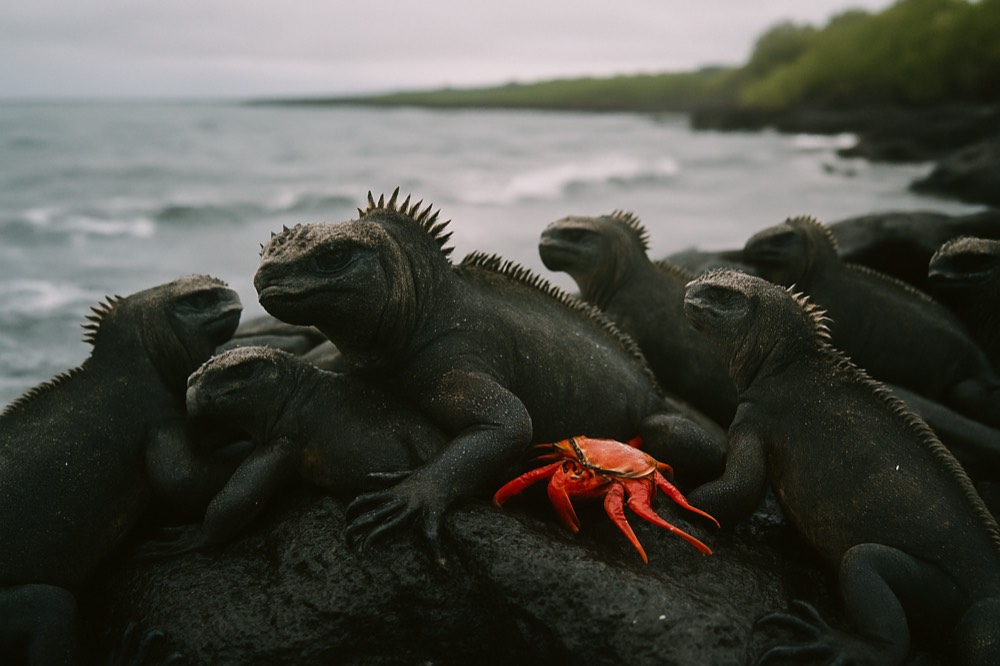
The Islands of Fire route is the cheapest verified way onto that coast on this roster. Its confirmed stops read Bartolome, Santa Cruz, Isabela, Fernandina, Santiago and Baltra, it carries a 5.0 from 24 reviews, and it starts at $4,604 per person for 5 days. La Pinta's 7-day route confirms Santa Cruz, Isabela, Floreana, Fernandina, Baltra and Rabida at $8,066 with the roster's largest review pool at 48. Between them sits the Natural Selection Journey, which adds Espanola and San Cristobal to the western loop.
One caution that applies to every ship: the itinerary is fixed. Park resolutions authorize day-by-day AM and PM schedules that cannot be modified under any concept, and only vessels under 20 passengers may change route at all outside proven emergencies. So choose the route, not just the ship, and cross-check the confirmed stops on the listing against what you most want to see. The cruise itineraries guide compares the common loops island by island.
What Do The Reviews Actually Say About These Ships?
La Pinta holds the strongest guest evidence on the roster at 5.0 from 48 reviews, the Isabela II Islands of Fire route holds 5.0 from 24, and the Natural Selection Journey holds 4.9 from 31. The Seaman Journey has no reviews yet, and the private 5-day cruise sits at 4.0 from a single review. Small pools mean thin evidence, not bad ships.
Honest numbers matter here because the whole Galapagos booking market runs on small review pools. Across the 50 multi-day products on this site there are 381 reviews in total, and the largest single pool is 56. A rating from three people tells you almost nothing; a rating from 48 tells you something. The table below is the full cruise-ship picture, with each rating shown alongside its review count.
| Ship / package | Rating | Review count | What the pool supports |
|---|---|---|---|
| La Pinta, 7 days | 5.0 | 48 | The most guest-tested ship on the roster |
| Isabela II Natural Selection, 7 days | 4.9 | 31 | Consistently positive across a real pool |
| Isabela II Islands of Fire, 5 days | 5.0 | 24 | Strong evidence on the western route |
| Private 5-day cruise | 4.0 | 1 | One experience, no consensus either way |
| Seaman Journey, 5 days | none yet | 0 | No guest evidence, listing detail only |
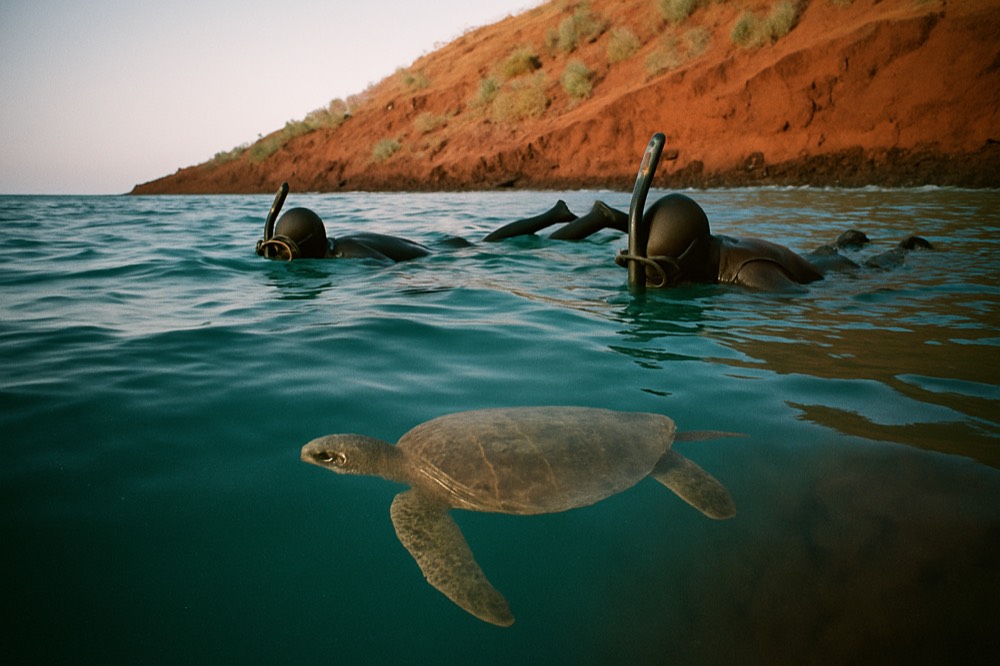
The pattern in what guests write about Galapagos ships generally, across forums and review pages, is remarkably consistent. People who took a small-ship cruise overwhelmingly say they would do the same again, and the recurring regrets are practical: booking too short an itinerary and missing the remote sites, not researching the specific boat and cabin, and being surprised by extras. The extras list is predictable and worth budgeting: the $200 park fee paid in cash on arrival, the $20 transit control card, wetsuit and snorkel rentals that are nominally optional but functionally necessary, crew tips and drinks.
The park fee mechanics catch people out more than any ship detail. It is paid in cash, US dollars, to rangers at Baltra or San Cristobal airport on arrival, and no official online prepayment portal exists, whatever a blog tells you. The transit control card is $20 per person, bought at the council counter at Quito or Guayaquil airport before check-in, with free online pre-registration to speed the counter up. The official fee page is published by the national park directorate and is the page to check before you fly.
How Much Does A Top Galapagos Cruise Ship Cost?
The verified cruise-ship prices on this roster run from $3,560 per person for a private 5-day cruise to $8,066 for La Pinta's 7-day route, with the Isabela II ships at $4,604 and $6,137 and the Seaman Journey at $4,500. All prices are per person, and the $200 park fee and $20 transit card are extra on top of most listings.
Those are listing prices, and they move on the monthly refresh, so treat them as the current floor rather than a promise. What does not move is the fee structure around them. The park entrance fee is $200 for a foreign adult, $100 for a child under 12, both in cash on arrival. The transit card is $20. Flights from the mainland are separate unless a listing says otherwise, and the flight-included field is often simply not stated, which is different from not included, so ask before assuming.
Value for money on these ships is mostly a question of route per day rather than luxury per night. La Pinta runs about $1,150 per day, the $8,066 fare spread over seven days, and carries the deepest review pool of any cruise here, rated 5 across 48 reviews. At roughly $920 per day, Islands of Fire buys the western circuit in five days. The Seaman Journey at roughly $900 per day includes all meals, which most of the roster does not, and that difference adds up: a week of dinners in Puerto Ayora is real money that a full-board ship absorbs. The Galapagos package cost guide breaks the full budget, including flights, fees and tips, line by line.
A cheaper structural option is worth naming even though it is not a liveaboard: the Discovery Premium Bay Tour, a 4-day land-based package from $450 per person with 4.9 from 24 reviews, all meals included, and confirmed stops on Santa Cruz, with arrival via the airport island of Baltra. It is not a cruise and does not reach Fernandina, but for a traveller testing whether the islands suit them, it is the lowest verified entry point on the site, and comparing it against a $4,500 cruise is a fair exercise in what a hull is actually buying you.
Which Galapagos Cruise Ship Should You Actually Book?
Book La Pinta's 7-day route if budget allows and you want the most guest-tested ship and the widest island list at 5.0 from 48 reviews. Book an Isabela II route for the western islands at a lower price. Book the Seaman Journey for full-board luxury at $4,500, and the Discovery Premium Bay Tour if you want the Galapagos without the cruise.
The honest summary is that there is no single best ship, only best matches. A traveller whose priority is the flightless cormorant and the western coast should be on Islands of Fire or La Pinta and nowhere else. A traveller who wants the longest, calmest, most full-service week should compare the Natural Selection Journey against La Pinta directly, since both run 7 days and their confirmed routes overlap heavily. A traveller who wants luxury service and every meal paid for, and who accepts that no one has reviewed the ship yet, has the Seaman Journey. And a traveller who is not sure the cruise format suits them at all has a genuine land-based alternative at a fraction of the price.
Two timing notes finish the picture. Foreign demand peaks in March and April, Ecuadorian demand peaks in August, and September is the annual trough, so shoulder dates are where availability and price behave best, a pattern the best time for a Galapagos cruise guide explores month by month. And whatever you book, check the live listing's cancellation terms before paying: several products on this roster offer free cancellation, and on a trip with this many moving parts, that flexibility is worth real money.
Common Questions About The Best Galapagos Cruise Ships
What Is The Best Galapagos Cruise Ship?
On verified numbers, La Pinta's 7-day Darwin's Legacy route is the strongest pick: 5.0 from 48 reviews, the largest review pool on the roster, from $8,066 per person. The Isabela II ships follow closely at 5.0 from 24 and 4.9 from 31 reviews. The right ship still depends on your route, dates and budget.
How Many Passengers Can A Galapagos Cruise Ship Carry?
Each cruise permit carries a maximum of 16 passengers and a cruise vessel a maximum of 64, under the 2016 special tourism regulation for protected areas. The park's 2014 management plan contemplates vessels up to 100 passengers as a ceiling, and only vessels under 20 passengers may change their itinerary at all.
Do Galapagos Cruises Have One Guide Per 16 Guests?
No verified Galapagos rule states a guide ratio. The 1:16 figure that appears on many websites comes from the regulation's continental protected-area provisions, which explicitly exclude Galapagos. What is verified: a park-accredited naturalist guide is compulsory, and each 16-passenger permit is the grouping the park works with.
Which Galapagos Cruise Ships Go To Fernandina?
The Isabela II Islands of Fire 5-day route, the Isabela II Natural Selection 7-day route and La Pinta's 7-day route all confirm Fernandina among their stops. Fernandina and western Isabela cannot be reached on a day tour from a hotel, so a ship is the only way to that coast.
How Much Does The Best Galapagos Cruise Cost?
The top ships on this roster start between $4,500 and $8,066 per person depending on length and route. The $200 park entrance fee and $20 transit control card are extra on most packages, paid in cash at the airports, and mainland flights are usually separate unless the listing states otherwise.
Are Galapagos Cruise Itineraries Fixed?
Yes. The park authorizes day-by-day itineraries that cannot be modified without express park authorization, foreign yacht itineraries run at most 15 days, and only vessels under 20 passengers may change route outside proven emergencies. The route you book is the route you sail.