Is It Better To Fly Into Quito Or Guayaquil To Galapagos?
Quito or Guayaquil for your Galapagos flight: altitude, schedules, connection times, airport procedures and which gateway your package already routes through.
 By Oleg Galeev, Editor
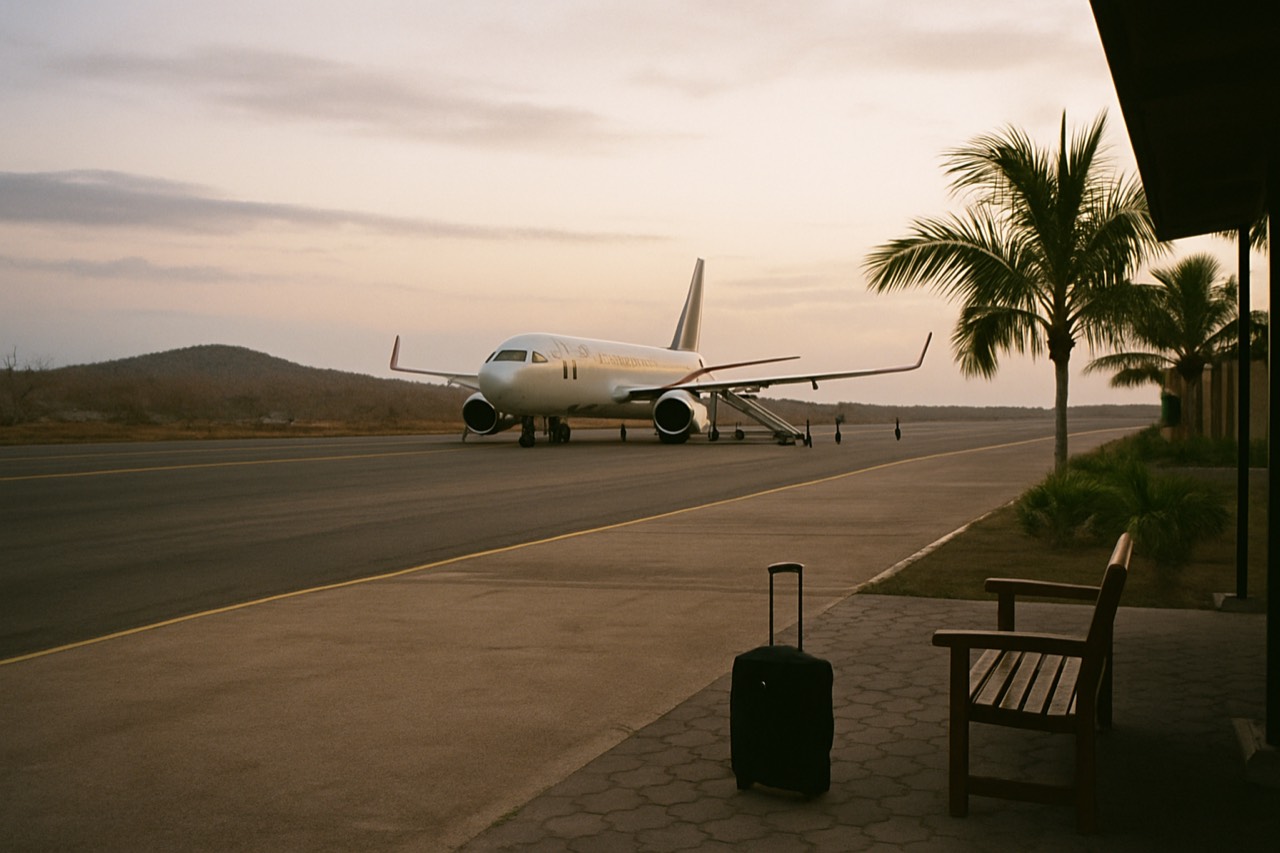
Is It Better To Fly Into Quito Or Guayaquil To Galapagos?
For most package buyers the gateway is already decided: your tour's included or recommended flight routes through one city or the other, and the practical answer is to follow it. If you are choosing freely, Guayaquil is the faster, lower, simpler connection at sea level, while Quito at 2,850 metres adds an acclimatisation night and a colonial city worth a day or two of your trip.
Avianca and LATAM operate the routes from both cities, flying nonstop to Baltra and to San Cristobal. That symmetry is recent history rather than a permanent fixture, and it means the old advice about one gateway being "the only real option" is out of date. What has not changed is the shape of the decision. Guayaquil sits at sea level in the coastal lowlands, roughly an hour closer to the archipelago by air, and its airport is a straightforward warm-weather hub. Quito sits high in the Andes, and its thin air is the single biggest factor that separates the two experiences.
The honest framing is this: neither airport is better in the abstract. One is better for a tight schedule and a body that dislikes altitude. The other is better for a trip that wants a mainland chapter anyway. Most Galapagos packages sold today already build in the answer, because multi-day tours typically start with a night in Quito or Guayaquil before the morning flight to the islands. If your package does that, the question answers itself and this page mostly tells you what to expect at the airport you end up in.
There is also a third gateway now, and almost nobody mentions it. Since 31 March 2026, LATAM has flown a Cuenca to Quito to Baltra route twice weekly, approved by Ecuador's civil aviation authority, which means a traveller starting in the southern sierra can reach the islands with a technical stop in Quito and no plane change. For most readers this is a footnote. For anyone already based in Cuenca it removes a connection entirely.
If your trip is still open-ended, the selection below shows the range: a package that builds Quito into the itinerary, a Peru-plus-islands combination, and a cruise that skips the mainland question altogether.
Which Airport Gets You To The Islands Faster?
Guayaquil is the shorter hop: its lowland location puts it roughly an hour closer to the archipelago by air, and its flights are the ones most likely to leave and arrive on time in the cool season. Quito's flights climb out of a high Andean valley, which adds distance, and its weather can delay early departures. Neither city offers a nonstop advantage the other lacks; both fly to Baltra and San Cristobal.
The schedule picture matters more than raw distance. Flights from both cities typically leave in the morning, because the Galapagos day runs early and cruise pickups happen at the island airports around midday. From Guayaquil the flight is shorter, so a slightly later departure still lands at a civilised hour. From Quito the earlier start is standard practice, which means an earlier wake-up and, in practice, a hotel near the airport or a package that handles the transfer for you.
Frequency is where the two cities genuinely differ in character rather than in kind. Aggregator schedules updated through September 2026 show multiple daily departures from Guayaquil and fewer from Quito, with the exact counts shifting as airlines adjust. Treat any specific frequency you read online as a snapshot. What is stable is the airline pair: Avianca and LATAM between them cover both gateways to both island airports.
One scheduling wrinkle worth knowing before you book anything is runway maintenance at Quito. Reported 2026 closure dates at UIO include several Saturdays and Fridays between April and October, and an airline will rebook you, sometimes onto a different day than you planned. If your package's island flight is fixed to a specific date, a Quito departure gives you one more moving part. Check your airline's notices for the week you travel.
For cruise passengers there is an extra reason the schedule question is not really yours to solve. A naturalist guide meets cruise guests at Baltra airport, per the park's own arrival guidance, and the boat's itinerary is locked to the calendar. Miss the flight and the boat does not wait. That is why cruise packages almost always include or strongly recommend the mainland night before, whichever city you fly from. The Galapagos flights, park fee and transit card guide covers the money side of that mainland night in detail.
Does Quito's Altitude Actually Matter For A Galapagos Trip?
Quito sits at about 2,850 metres, and a meaningful minority of sea-level dwellers feel the thin air on day one: shortness of breath on stairs, a headache, poor sleep. Most people acclimatise in a day or two, which is exactly what an overnight stop provides. Guayaquil, at sea level, removes the question entirely, and that alone decides it for some travellers.
The altitude is not a medical warning for most visitors, but it is a real planning input. If your Galapagos package starts with an evening arrival into Quito and a morning flight out, you will spend perhaps twelve hours at altitude, mostly asleep, and the effect is minor. The calculus changes if you want to explore the historic centre, walk the hills, or head onward to the Andes. Then you want two nights, and the acclimatisation becomes a feature: it sets you up for anything higher you do next, whether that is the Cotopaxi highlands or, for combination tours, Cusco and Machu Picchu.
The comparison below is the one to screenshot before you book.
| Factor | Quito (UIO) | Guayaquil (GYE) |
|---|---|---|
| Elevation | About 2,850 m | Sea level |
| Flight time to the islands | Longer, Andean routing | Roughly an hour shorter |
| Nonstop destinations served | Baltra and San Cristobal | Baltra and San Cristobal |
| Airlines | Avianca, LATAM | Avianca, LATAM |
| Typical stopover value | High: colonial centre, day trips | Moderate: riverfront Malecón, short stop |
| Acclimatisation need | One to two nights recommended | None |
| Cool-season weather risk | Morning fog and delays possible | Low, coastal |
Travellers who choose Quito for the stopover rather than the flight usually report it as the better half of the decision. The historic centre is one of the best preserved in the Americas, and a package that strings it together with the islands gives you two very different Ecuadors for one airfare structure. Travellers who choose Guayaquil usually report the opposite priority: they wanted the simplest possible bridge between an international arrival and a boat.
The altitude question also interacts with your return. Flying out of the islands to Quito and then onward internationally the same day is common and works, but it stacks three flights into one long day. Guayaquil's shorter island hop makes a same-day international connection slightly less fragile. If your international ticket home leaves late at night, either city works; if it leaves early evening, prefer the shorter island leg.
How Do Flight Prices And Schedules Compare Between The Two Cities?
Flight fares to the islands are volatile and should never be quoted as fixed fact, but the structural pattern is stable: fares from both cities move together, and the gateway rarely changes the total by much. What changes money more is whether your package includes the flights at all. On this site's roster, one 4-day tour includes roundtrip flights while most leave them for you to arrange.
That last point deserves emphasis because it surprises people. On a typical land-based package, the listed price covers the islands: hotels, transfers, guided days, some meals. The mainland-to-island flights are often separate, and so are the park fee and the transit card. One tour in the roster, the 4-day highlights package from $2,299, names roundtrip flights in its own title, which is rare enough to be worth checking for. Most others are silent, and silence means you buy the flights yourself.
When you do buy the island flights, the choice of gateway is usually made for you by your international ticket. If you land in Quito from abroad, buying the island leg from Guayaquil means a domestic hop first, extra cost and extra risk. If you land in Guayaquil, the reverse applies. The genuinely free choice belongs to travellers entering Ecuador overland, or from a neighbouring country, and to anyone booking an open-jaw international ticket. For them the practical advice is: pick the city you want to spend a night in, because the airfare difference is noise compared with the stopover value.
A few fare realities hold across both gateways. Morning flights cost more than the crack-of-dawn ones. Cool-season dates around the foreign peak of March and April run fuller, and the domestic peak in August fills up with Ecuadorian travellers. September is the annual trough for arrivals, park statistics show, and it is also the month you are most likely to see promotional fares. None of these are quoted prices; they are patterns, and your live fare check outranks all of them.
What Happens At The Airport Before Your Galapagos Flight?
Arrive three hours early, whichever city you fly from. Both airports run a biosecurity inspection of every bag before check-in, a transit control card counter you must stop at, and a sworn goods declaration. The transit card costs $20 per person and is bought at the counter; the $200 park fee is paid later, in cash, to rangers on the islands.
The three-hour advice comes from the Galapagos government's own travel FAQ, and it is not padding. The biosecurity agency, ABG, inspects checked and carry-on baggage at a dedicated room before airline check-in, and the queue moves at its own pace. Fresh produce, meats, plants and soil-bearing items are on the restricted list, and the official products page is the thing to read before you pack rather than the thing to argue about at the scanner. The inspection happens again on arrival at Baltra or San Cristobal, and once more at the docks before any inter-island ferry.
The transit control card, the TCT, is the piece most travellers get slightly wrong. You can pre-register online through the official platform, which speeds the counter up, but an individual traveller still buys the card in person at the Quito or Guayaquil airport counter before check-in. Only travel agencies can purchase cards in advance, at least 48 hours ahead. The card costs $20, must be shown again when you leave the islands, so do not lose it, and each separate trip needs a new one. The official FAQ spells all of this out, and it contradicts the blog-post version of events that circulates widely.
| Airport step | Where | Cost | Notes |
|---|---|---|---|
| Biosecurity bag inspection | ABG room, before check-in | Included | Checked bags sealed after scan |
| Transit control card (TCT) | CGREG counter, before check-in | $20 per person | Online pre-registration saves time |
| Sworn goods declaration | Handed to inspector | Included | Complete it honestly and legibly |
| Park entrance fee | Baltra or San Cristobal, on arrival | $200, foreign adult | Cash, US dollars, paid to rangers |
| Cabin fumigation | Before landing | Included | Airline announces it beforehand |
Two details make the morning smoother. First, carry clean US dollar notes for the park fee; card payment is not reliably available at the ranger checkpoints, and a rumpled bill is a problem nobody needs at 11am with a boat waiting. Second, keep your transit card in your passport, because you will need it at departure and the replacement process is a bureaucratic detour you do not want on your last morning.
Once you land, the ground transfer differs by island. At Baltra, a free bus runs to the Itabaca Channel, a barge crosses for $1, and then a public bus reaches Puerto Ayora for about $2, or a shared taxi for about $25 per vehicle. San Cristobal's airport is a ten-minute, $1.50 to $3 ride from town. If a cruise is booked, a guide meets you at the airport instead, which is one of the quiet advantages of a ship-based package.
Which Packages Already Build In The Quito Or Guayaquil Night?
Mainland-plus-Galapagos packages answer the gateway question inside the itinerary: a Quito-based tour gives you the capital and acclimatisation before the islands, while most pure island-hopping and cruise packages simply name the city where your flight starts. One 12-day package on this roster builds the Quito stay in explicitly, running from $3,999 with free cancellation and no reviews yet.
That tour strings together Quito with San Cristobal, Santa Cruz and Isabela across twelve days, which is the cleanest way to turn the gateway decision into a feature of the trip. You spend the altitude night in a city worth walking, fly out the next morning, and the operator holds the whole structure together. It has no reviews yet, which is honest information rather than a red flag: it simply has not accumulated a public track record, and you should read the listing's own cancellation and inclusions detail carefully rather than lean on social proof that does not exist.
The Peru combinations take the same logic further. A 12-day Cusco, Machu Picchu and Galapagos tour, rated 5.0 from 2 reviews and priced from $4,495, uses the mainland chapter for the Andes and then drops to the islands. For that itinerary the Quito-versus-Guayaquil question is nearly moot, because the trip's shape is continental first, island second, and the operator routes you accordingly. If your dream trip is Machu Picchu plus wildlife, the Galapagos and Machu Picchu packages guide lays out the combination options, and these combos save you from stitching two bookings together yourself.
Cruise-first travellers face a different version of the question. A cruise package such as the 7-day La Pinta itinerary, 5.0 across 48 reviews from $8,066, starts and ends at the island airports, and the mainland night is whatever you arrange before it. Here the gateway choice is purely logistical: pick the city with the international connection that fits, spend one night, fly out. For more on how the two trip styles differ in practice, the cruise versus land package comparison breaks down the trade-offs.
One practical note for anyone booking a package with a fixed island start date: build a buffer. A missed connection in Quito or Guayaquil on the morning of your cruise start is the single most expensive thing that can go wrong on a Galapagos trip, because the boat leaves on schedule and itineraries in the park cannot be modified once approved. Arriving the night before, whichever city that is, converts a two-hour margin into a fourteen-hour one. Every experienced operator builds this in, and so should any independent booking.
The last decision layer is your own energy budget. A trip that lands in Quito, sees the historic centre, flies to the islands, and returns via Guayaquil for an international departure is a classic open-jaw that many frequent flyers book without thinking. The reverse works too. The only genuinely poor plan is the same-day international-to-island connection with no mainland night, from either city, in any season. For a wider look at how the pieces fit, the Galapagos Islands Tour Packages site breaks the whole booking process down, and the how to book a Galapagos package guide walks through the sequence step by step.
Common Questions About Flying Into Quito Or Guayaquil For Galapagos
Is It Better To Fly Into Quito Or Guayaquil To Galapagos?
Guayaquil is faster and sits at sea level, so it suits tight schedules and travellers who dislike altitude. Quito, at about 2,850 metres, adds an acclimatisation night and a colonial stopover worth a day or two. If your package already routes through one city, follow it; the difference is smaller than the inconvenience of fighting it.
How Early Should I Arrive At The Airport For A Galapagos Flight?
Three hours before departure, from either Quito or Guayaquil. The Galapagos government's own FAQ gives that figure because of the biosecurity bag inspection and the transit card counter, both of which happen before airline check-in.
Can I Buy The Transit Control Card Online In Advance?
You can pre-register online, which speeds things up, but individual travellers still buy the $20 card in person at the Quito or Guayaquil airport counter. Only travel agencies can purchase cards in advance, filing at least 48 hours ahead.
Does The $200 Park Fee Get Paid At The Mainland Airport?
No. The Galapagos National Park entrance fee is paid in cash, in US dollars, to park rangers on arrival at Baltra or San Cristobal airport. There is no official online prepayment portal for it, so carry clean notes.
Which Airlines Fly From Quito And Guayaquil To The Galapagos?
Avianca and LATAM operate the routes in current schedules, from both mainland cities to both Baltra and San Cristobal. LATAM also flies a Cuenca to Quito to Baltra route twice weekly since March 2026. Frequencies change, so check live schedules.
Is One Night In Quito Enough To Acclimatise?
For most people, yes, especially if the night is mostly for sleeping before a morning flight. If you plan to walk the hills, visit the historic centre properly, or continue to higher Andean destinations, two nights is the safer and more enjoyable choice.