How Much Does A 7 Day Trip To Galapagos Cost?
A seven-day Galapagos trip costs a package fare of $1,650 to $8,066 plus flights and fixed government charges. Here is the full breakdown.
 By Oleg Galeev, Editor
How Much Does A 7 Day Trip To Galapagos Cost?
A seven-day Galapagos trip costs a package fare of $1,650 to $8,066 per person depending on whether you sleep in hotels or on a ship, plus mainland flights in the $250 to $600 planning range and two fixed government charges, the $200 park entrance fee and the $20 transit control card. Meals and hotel pickup vary widely by package, which is why the spread is so large.
The honest answer starts by separating three cost lines that most headlines blur together. The first is the package fare, the number you actually pay a tour operator. The second is the airfare, which almost no package includes and which no operator controls. The third is a pair of fixed charges that every visitor pays regardless of how they travel: the national park entrance fee and the transit control card. Only when all three are on the table does the real price of a week in the archipelago become visible, and only the first of the three is something you can actually shop around.
On this site's roster, seven-day packages run from $1,650 for the Three-Island Hopping tour with pickup included up to $8,066 for the seven-day La Pinta cruise, which rates 5.0 across 48 reviews, the deepest review pool of any product listed here. Between those poles sit options such as the $1,857 Penguin Route tour and the $2,363 eight-day multisport, both land-based. The choice between them is less about quality than about where you sleep and how far from the inhabited islands the itinerary reaches, and that is a decision worth making before you look at a single price tag.
Timing also moves the package fare, though not always in the direction people expect. Demand peaks twice a year: foreign visitors concentrate in March and April, Ecuadorian visitors in August, and September is the annual trough for arrivals. A week travelling in the shoulder months can face different availability and different fares than the same week in peak season, so when you shop matters almost as much as what you book.
If you are comparing options right now, these three seven-day packages bracket the market well: a land-based hopper, a wildlife-focused route, and a small-ship cruise at the top of the range.
For a fuller treatment of where the money goes across every package length, the Galapagos package cost guide breaks down the same three cost lines for four, five, six and eight-day trips.
What The Package Fare Actually Buys
Package fares for a week in the Galapagos cluster into three tiers: hotel-based island hopping from $1,650 to $2,363 with breakfast and usually lunch included, small-group or multisport versions at a modest premium, and liveaboard cruises from $6,137 to $8,066 with all meals and the remote western islands on the itinerary. The fare rarely includes flights, the park fee or the transit card.
The cheapest week on the roster is the Three-Island Hopping tour at $1,650 per person, which covers San Cristobal, Santa Cruz, Isabela and North Seymour with hotel pickup, breakfast and lunch. It rates 4.7 across 3 reviews, a small pool, so treat that number as an early signal rather than a verdict. At the other end, the La Pinta seven-day cruise costs from $8,066 and visits Fernandina, the most pristine island in the archipelago and one that no day tour from a hotel can reach.
What the fare buys differs more than the price suggests. A land-based package gives you nights in a hotel, freedom to walk to dinner in Puerto Ayora or Puerto Villamil, and day excursions by boat. A cruise fare buys the boat itself, all meals, and access to visitor sites that are simply too far from any town for a day trip. Recent travellers who have done both describe the trade bluntly: one wrote on a Galapagos travel forum that the cruise was "vastly superior in every way", while another preferred the land-based portion for its flexibility. Both are describing the same real trade-off, and neither is wrong.
There is also a structural fact behind the cruise premium that most buyers never hear. Under Ecuador's special tourism regulation for protected areas, a navigable cruise permit carries at most 16 passengers and a cruise vessel at most 64, so a large ship is effectively running a stack of small permits. Approved itineraries cannot be modified, which is why cruise routes are published as fixed day-by-day schedules rather than flexible menus. You are not just paying for a bed on a boat; you are paying for a pre-authorised route through a park that controls every landing.
| Package (7 days) | Style | From price | Rating | Meals |
|---|---|---|---|---|
| Three-Island Hopping, Pickup Included | Land-based, standard | $1,650 | 4.7 across 3 reviews | Breakfast and lunch |
| The Penguin Route, 7-Day Tour | Land-based, standard | $1,857 | 5 across 3 reviews | Breakfast and lunch |
| 8-Day Multisport (comparison, longer) | Land-based, small group | $2,363 | 4.9 across 12 reviews | All meals |
| 7-Day La Pinta Cruise | Liveaboard, standard | $8,066 | 5 across 48 reviews | All meals |
A note on the table: prices are per person, verified against each listing, and they move on a monthly refresh cycle, so treat them as the current floor rather than a locked quote. The multisport row is included as a comparison point even though it runs eight days, because buyers comparing seven-day quotes almost always see it in the same search results.
Why Seven Nights Is The Number Everybody Quotes
Seven nights is the standard Galapagos week because the park's own itinerary system is built around it: cruise itineraries run up to fifteen days, and the classic visitor circuit of San Cristobal, Santa Cruz, Isabela and one or two outer islands fits neatly into seven days. That is also why eight-day cruises, at barely more total cost, are usually the better value per night.
The legal scaffolding behind this is real. Ecuador's special-regulation framework for Galapagos caps foreign vessel visit itineraries at fifteen days, at most two per vessel on different dates, and approved itineraries cannot be modified, as a 2021 park resolution for a named vessel states in so many words. Operators therefore design fixed routes, and the seven-day length became the industry default because it fits the central islands without rushing.
There is a second, quieter reason: arrival logistics eat a day. Flights from Quito or Guayaquil land at Baltra or San Cristobal in the late morning, the park fee and biosecurity checks take time, and the first afternoon is mostly transfers. A "seven-day" package on paper often delivers five and a half days of actual touring. Travellers on forums repeatedly say they wish they had booked longer, and the regret pattern in recent trip reports is consistently about short trips missing remote sites, never about trips being too long.
The eight-day comparison is worth a hard look. The 8-Day Multisport package costs from $2,363 against the $1,650 seven-day hopper, roughly 43 percent more money for an extra full day and every meal included instead of two. Per night, the gap narrows further. If your dates allow, price the eight-day version of any package before committing to the seven-day one.
The Fixed Government Charges Nobody Can Skip
Every visitor pays two charges on top of the package fare: the Galapagos National Park entrance fee of $200 for foreign adults, $100 for children under 12, paid in cash US dollars to rangers on arrival at Baltra or San Cristobal, and the $20 transit control card bought at the mainland airport. Together that is $220 per adult, and no package on this roster states that it includes them.
The park fee is the single biggest hidden line in most budgets. The official fee schedule, published by the park itself, sets $200 for foreign tourists over 12, with reduced rates for CAN and Mercosur nationals ($100 adults) and for Ecuadorian residents ($30). It is collected in cash, in US dollars, by park rangers at the airport checkpoints; there is no official online prepayment portal, so arriving without clean US notes is a genuine problem. Half of the money funds management of the protected areas, and the rest goes to municipal services on the islands.
The transit control card costs $20 per person per trip. The official guidance from the Galapagos governing council is that individual travellers pre-register online to save time but still buy the card at the counter at Quito or Guayaquil airport before check-in; advance purchase is limited to travel agencies. You cannot fly to Galapagos on a one-way ticket, and the maximum tourist stay is 60 days per year, non-extendable.
| Charge | Amount | Who pays | Where |
|---|---|---|---|
| Park entrance, foreign adult (12+) | $200 | All foreign visitors | Cash, on arrival at Baltra or San Cristobal |
| Park entrance, foreign child (under 12) | $100 | Children | Cash, on arrival |
| Transit control card | $20 per trip | Everyone, all ages | CGREG counter, Quito or Guayaquil airport |
| Itabaca Channel ferry (if landing at Baltra) | $1 | All Baltra arrivals | At the channel |
The full official fee schedule, including the CAN and Mercosur rates, is on the park's entrance fee page, and the card process is explained on the governing council's TCT FAQ. Budget the $220 per adult in cash and the question of hidden costs mostly disappears. Families should note the child rate halves the park fee, and children under 2 are exempt entirely, which softens the fixed-charge line for travelling households.
Flights: The Line No Operator Controls
Round-trip flights from Quito or Guayaquil to Baltra or San Cristobal typically run in the $250 to $600 per person planning range, and only two airlines fly the routes: Avianca and LATAM. One package on this roster includes its round-trip flights in the fare; the rest leave them to you, so compare quotes on the total, not the package price alone.
Flight prices move constantly and no verified fixed fare exists, which is why this site treats them as a planning range rather than a fact. What is verifiable is the route structure. Avianca and LATAM operate from both Quito and Guayaquil to both island airports, and since March 2026 LATAM has also flown a twice-weekly Cuenca to Quito to Baltra rotation. Baltra handles about 71 percent of arrivals, San Cristobal the remaining 29 percent, and your package's start island determines which airport you need.
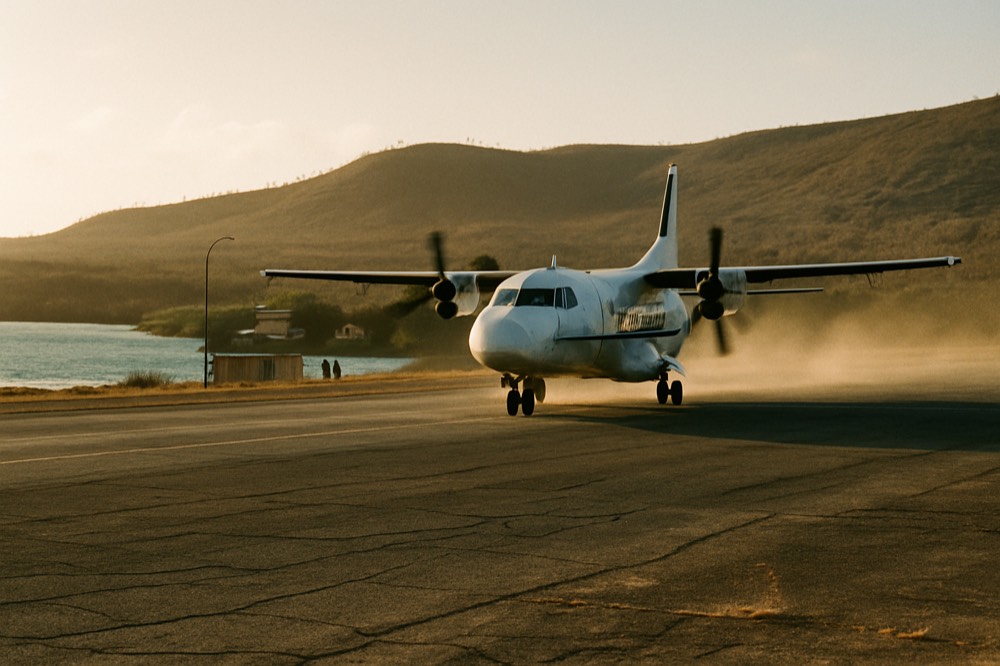
Two practical costs follow the landing. From Baltra, a free bus runs to the Itabaca Channel, the ferry across costs $1, and the public bus to Puerto Ayora costs about $2, or a shared taxi pickup about $25 for the vehicle. From San Cristobal the airport is ten minutes from town at $1.50 to $3. These are official figures from the park's own arrival guidance, and they are trivial next to the flight, but they explain why landing at Baltra adds an hour of transfers to day one.
One warning worth repeating: arrive at the mainland airport three hours early. Biosecurity inspectors examine every checked and carry-on bag before check-in, fresh produce and unprocessed plant or animal products are prohibited, and the sworn goods declaration is mandatory. The inspection is repeated on arrival in the islands, and again at the boarding docks before any inter-island travel, so a land-based hopping package puts you through the biosecurity line more than once. Miss the mainland window and the cheapest flight of the week becomes the most expensive.
The Eight-Night Question: Is A Week Actually Enough?
For most first-time visitors, seven days is enough to see the central islands well but not enough to reach the far west or Espanola without rushing, and the eight-day packages on the market add a full day of touring for roughly 20 to 45 percent more money. Travellers who have done both lengths consistently report wishing they had booked the longer trip.
The pattern in recent trip reports is remarkably consistent. People who booked four or five days describe missing Fernandina, Espanola or Genovesa. People who booked a week are satisfied but curious. People who booked ten days or a seven-night cruise almost never express regret. The reason is structural: the archipelago has 176 authorised visitor sites spread across islands that lie up to a full day's sailing apart, and the most wildlife-dense sites, Fernandina's flightless cormorants and the western penguin colonies, are the farthest from the towns where land-based packages start.
The Penguin Route tour illustrates the compromise. It is a seven-day land-based package from $1,857 that includes Bartolome, North Seymour and Isabela, rating 5 across 3 reviews. It reaches a lot, but Fernandina, which only cruises visit, is not on its confirmed stop list. The La Pinta cruise from $8,066 does include Fernandina, which is most of what the extra money buys.
The wildlife itself does not care about your schedule, which is another argument for the longer trip. The waved albatross, the bird most visitors most want to see, arrives at Espanola in March and lays eggs from mid-April to late June, a window that a rushed central-islands week can miss entirely. Marine iguanas mate from November to February, giant tortoises nest from July to October, and sea lion pups appear mostly from August to October. None of these events move to fit a seven-day template, so the calendar and the package length have to be chosen together.
If you are still weighing lengths, the question how many days is enough in Galapagos works through the trade-off day by day, and the cruise versus land package guide covers the sleeping-arrangement side of the decision.
Putting The Three Lines Together
The package fare is the only line you can shop, so the savings come from comparing what each fare includes rather than from hunting the lowest headline number. Add the $220 per adult in fixed charges and the flight range to every quote you see, and the cheapest headline price is rarely the cheapest trip.
Two packages with the same headline price can differ by hundreds of dollars in real cost once meals, pickups and confirmed stops are counted. A $1,650 package with breakfast and lunch still leaves dinners, roughly a week of them in towns where restaurant prices are mainland-Ecuador premium. An all-meals package at a higher fare can be cheaper in practice. Check the confirmed stops too: on this roster, stops are only listed as confirmed where the operator's own listing states them, and anything beyond that is an option, not a promise.
The final shopping list, then: pick your length first, since Galapagos Islands Tour Packages of every length follow the same three-line cost structure. Then compare fares on what they include, add the $220 in fixed charges per adult, budget the flight range, and hold back a little cash for the dinners, tips and snorkel-gear rentals that recent travellers consistently name as the costs they did not see coming. Do that arithmetic on every quote, in writing, and the difference between a $1,650 week and an $8,066 week will explain itself.
If the seven-day land-based route fits your budget and dates, these are the three packages worth a final side-by-side look.
Common Questions About A 7 Day Galapagos Trip Cost
How Much Does A 7 Day Trip To Galapagos Cost?
A package fare of $1,650 to $8,066 per person, plus mainland flights in the $250 to $600 planning range, plus $220 per adult in fixed government charges. The fare alone is never the full price; the three lines together are.
Is The $200 Park Fee Included In Package Prices?
Almost never. On this roster, listings rarely state whether the fee is included, which means "not stated", not "included". Budget $200 per adult in cash US dollars, paid to rangers on arrival, on top of every quote you see.
Do I Need Cash For The Park Entrance Fee?
Yes. The fee is collected in cash, US dollars, at the Baltra and San Cristobal airport checkpoints, and no official online prepayment portal exists. Arrive with clean notes; cards are not reliably accepted.
Why Do Some 7 Day Packages Cost Three Times More Than Others?
The main driver is where you sleep. Hotel-based hopping packages run from about $1,650, while liveaboard cruises from $6,137 to $8,066 include all meals and reach remote islands like Fernandina that day tours cannot. The premium buys access, not just comfort.
Is An 8 Day Package Better Value Than A 7 Day One?
Usually, yes. On this roster the step from the $1,650 seven-day hopper to the $2,363 eight-day multisport adds a full touring day and every meal for roughly 43 percent more. Per night, and with dinners no longer coming out of pocket, the gap narrows further.
What Hidden Costs Do Travellers Report Most Often?
Dinners on half-board packages, crew and guide tips, wetsuit and snorkel-gear rentals, drinks, and the inter-island logistics on land-based routes. Recent trip reports also flag the $200 cash park fee and the $20 transit card as the charges people did not plan for.